(And could that be the best thing that ever happened to us?)
So – hands up who calls themselves an indie? Hands up if you’ve enjoyed selling on Kindle? And hands up if you think you’ve got less lazy since you started selling on Kindle? I don’t mean time lazy, I mean idea lazy.
Still with me?
OK, I’ll start. Today sees the end of Amazon’s Sunshine Deals summer reading extravaganza, and for many indie authors it can’t come a day too soon. The effect on those of us tenuously in the top 100 has been devastating. Sales have tanked (from around 120 a day to 40 a day in my case) as ultra-cheap books by established authors have demonstrated that readers’ love of all things indie actually referred to price not content. And they’ll be with us for a while to come now they’ve worked into the recommendation algorithm.
But that’s not the most worrying development. The US forum moderators kicked all promotion threads into a “Meet Our Authors” forum, and today it seems at least two global changes have kicked in. The “insert product link” button no longer lists books, so you have to manually type in/paste a live link to a book, and the brackets many of us used after our book titles have all disappeared.
Those were two of the indies’ biggest marketing tools – the former offering readers simplicity, the latter being an attention grabber. These changes affect everyone in theory, but in practice impact the indies most.
So this is war on the indies, right? Well, quite possibly. Almost certainly Amazon is clearing the way for its own publishing programme.
But so what? I’m an indie. I’ve been saying for a while I think we’ve seen a change in what that means as more and more people with mainstream genre books have “gone indie”, meaning they’ve self-published, usually through Kindle. Heck, I’ve had a genre book in the top 100 bestsellers for almost 3 weeks. But for me whilst that’s great, and it’s been a financial lifeline at an incredibly difficult time on a personal level, it has nothing to do with REALLY being indie. I argued in April that the real winners on Kindle would be prolific midlisters who built a fanbase and didn’t rely on market vagaries – they would successfully replace the modest-income-addition they’d lost as publishers dropped their modest-income-addition-generating midlist.
For me being an indie is about freedom. It’s about writing the books you want, no, the books you *have* to write, and then being free to put them out in the world. They can be genre books or the most obscure experimentation, but the point is you didn’t put them there to make money, you did it because it mattered to do it your way, and to find your own readers, and get to know them and interact, and be less faceless than a regular author. Being indie is about individuality and community all rolled into one.
Which brings me back to my initial questions. It’s been too easy to make sales as an “indie” on Kindle. Lots of people spent lots of time on Amazon forums (yeah, me too) posting links to their books. They spent more time marketing than ever before, and with real success, and thought that was the key. Sound familiar, not just on a personal level but in terms of Business Studies 101? Yeah, of course it does. It’s the blinkered behaviour that’s characterised every bubble since time began – find a surefire way that works and stop looking for an alternative. Then wail and rend clothes when that surefire way vanishes.
Of course not everyone who Kindled their books was like that. The forums are filled with people who’ve used them to build a genuine relationship, Kevin Kelly style (I’ve said time and again the past two years how weird it is people stopped talking 1000 true fans – the reason’s simple: 1000 true fans isn’t easy. It seemed ersatz. It wasn’t). And people who do other stuff as well. They’ll be the ones who ride out the storm, because the readers will follow them.
And what of people like me, and the rag tag bunch of us at Year Zero and eight cuts gallery for whom indie is an ethos not a business strategy? Well, I’ll carry on doing live shows, weird online exhibitions, sharing recipes, and looking for weird and wonderful ways to bring what I write to people who don’t know about it. I’ll thank Amazon for the kick up the backside and warning not to get complacent (as well as for the sales whilst they were there of course). I’ll remind myself every day of what matters about writing, and culture as a whole. And I have to say I’ll rather enjoy the fact that very soon it’ll stop being cool to be indie. It’s made me a bit hot under the collar flyingthat close to the mainstream sun.
And at teh risk of sounding like a "take your medicine" parent, it'll do indie writers in general a power of good. The real indie writers. Those who've succeeded on Kindle because they engaged with readers will carry on succeeding. For everyone else the end of a cash cow may eb what's needed to get them doing it right and non-lazily before they learn bad habits.
Oh, and here are my books :)
Black Heart High
The Company of Fellows
The Man Who Painted Agnieszka's Shoes
Songs from the Other Side of the Wall
(life:) razorblades included
Showing posts with label indie publishing. Show all posts
Showing posts with label indie publishing. Show all posts
Wednesday, 15 June 2011

Wednesday, 18 August 2010
I Just Started a Publishing House
Some of you know this from snippets that've been leaking out, but now I'm coming out and clean and saying it how it is. A lot of people have told me for some time I should. Now, finally, I've worked out the way I want to do it, and I have. And I have the first two books coming out in November.
 As you might expect, eight cuts gallery press is not like other publishing houses. To start with, we won't make a penny's profit from your book.
 As you'd expect for part of my new project eight cuts gallery, the press will focus on a very narrow niche of books, within the contemporary urban fiction area if you had to put a genre to it. I would love to receive submissions, but like I say, this isn't a regular press. I'm only interested in submissions from writers who buy into what I'm doing (metaphorically, it's not a vanity press).
Which is what, exactly?
Well, first and foremost, I want to whip up a storm about the very best stuff that's out there, the kind of stuff I want to read, the kind of stuff that for one reason or another may find it hard to find a home in the mainstream. Our first two offerings, for example, are around 25-30,000 words. I'll also be bringing out poetry and short story combos. I also want to give the very best self-published works a chance to storm the major literary prizes that currently will not accept self-published novels.
eight cuts gallery press is an integral part of the overall eight cuts gallery project, designed to bring great literature to the public's attention regardless the format, the style, the commerciality; regardless anything save the fact it's great literature.
So what are we about?
Here's a peek at those first two books. Click the title to read the opening chapter.
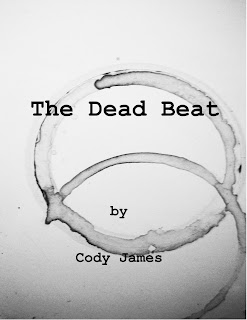
The Dead Beat by Cody James (whom you may know as Daisy Anne Gree)
It’s 1997, and the comet of the century is due some time about now, on its 3000 year roundtrip.
“Man, fucking Emeryville,” Lincoln said, pausing in his stride to hock phlegm onto the sidewalk.”
And so, for want of anything better to do, Adam and his meth addict friends end up in San Francisco, wondering where their place in the addict hierarchy might be, why no one has written a good book in over a decade, and what the fuck the comet might mean, when nothing on earth means anything.
And in a zip of light and a snort of meth the comet is gone, taking with it this last snapshot of earth for 3000 years, leaving Adam to wonder if it meant anything at all, or whether it was maybe just a bit cool that the sky looked different. Just for once. For the last time in his life.
Charcoal by Oli Johns
“Apparently there are three popular ways to kill yourself in Hong Kong.
Throw yourself off a building.
Hang yourself.
Burn charcoal in a sealed room.”
Oli can’t stop reading Deleuze, only it doesn’t seem to make any sense. And he can’t stop thinking about suicide. And Camus. And that sort of makes sense. But only sort of. And then he meets a seventeen year-old girl on the internet and they meet regularly for mindless sex. Only it’s not enough to stop the anxiety. And the obsession with suicide, although he knows he’ll never kill himself. And then there was that Korean model, the one who killed herself in Paris. And that writer, the one he met online. The one who said she’d tried to kill herself three times. The one who wrote that book…
As you might expect, eight cuts gallery press is not like other publishing houses. To start with, we won't make a penny's profit from your book.As you'd expect for part of my new project eight cuts gallery, the press will focus on a very narrow niche of books, within the contemporary urban fiction area if you had to put a genre to it. I would love to receive submissions, but like I say, this isn't a regular press. I'm only interested in submissions from writers who buy into what I'm doing (metaphorically, it's not a vanity press).Which is what, exactly?
Well, first and foremost, I want to whip up a storm about the very best stuff that's out there, the kind of stuff I want to read, the kind of stuff that for one reason or another may find it hard to find a home in the mainstream. Our first two offerings, for example, are around 25-30,000 words. I'll also be bringing out poetry and short story combos. I also want to give the very best self-published works a chance to storm the major literary prizes that currently will not accept self-published novels.
eight cuts gallery press is an integral part of the overall eight cuts gallery project, designed to bring great literature to the public's attention regardless the format, the style, the commerciality; regardless anything save the fact it's great literature.
So what are we about?
we will
- release an eight cuts gallery press print on demand paperback version of your book, without an ISBN, although you may attach an ISBN to other formats of your book
- enter the eight cuts gallery press edition of your book for major literary prizes, in consultation with you
- allow you to produce any additional versions you wish in any formats, and provide formatting and editing for those other versions, as well as putting you in touch with top producers in alternative formats
- publicise and sell your book in all formats
- take no money from sales of the eight cuts gallery press edition of your book (the exception being where your book is short or longlisted for a major literary award, in which case we will take a royalty from sales – yes, you read that the right way round – until the marketing fee the prize requires us to hand over is recouped)
- mention your book in all publicity, and ensure that your book appears on the click through page of any online articles by or about us
- sell your book online and in selected outlets, and at all events
- never associate you with defamatory material, but we may cause a brouhaha
- link to your primary website from our homepage
- let you retain all rights, whilst being happy to help negotiate the sale of those rights on your behalf should you wish, without taking a commission
- give all our writers an equal share of profits from eight cuts gallery press (80% split equally) and eight cuts gallery (20% split equally, with 20% to eight cuts gallery and 60% to participating artists)
- let you set the price for your work
- target sales, publicity, appearance and alternative format possibilities for you
provide full monthly statements of your sales, and forward all monies to you, by Paypal, on a monthly basis - send out review copies of the eight cuts gallery press edition in consultation with you
we’d like you to
- be available for media interviews within reason
- be prepared to have a photo and press sheet drawn up for publicity
- link to us from your website and mention us in interviews where possible and appropriate
- agree to your book and name being used in publicity material for eight cuts gallery events
- agree to the title and cover of your book appearing on eight cuts gallery press merchandise
- agree to be open to suggestions of possible alternative formats for your book
- let us quote up to 200 words from your work for publicity purposes
- let us purchase other formats of your work at wholesale price in order to send them for review, to display them at fairs, and to sell at our events at a price to be agreed with you (and we’d like to take 20% of the profits on non eight cuts gallery press editions)
Here's a peek at those first two books. Click the title to read the opening chapter.
The Dead Beat by Cody James (whom you may know as Daisy Anne Gree)
It’s 1997, and the comet of the century is due some time about now, on its 3000 year roundtrip.
“Man, fucking Emeryville,” Lincoln said, pausing in his stride to hock phlegm onto the sidewalk.”
And so, for want of anything better to do, Adam and his meth addict friends end up in San Francisco, wondering where their place in the addict hierarchy might be, why no one has written a good book in over a decade, and what the fuck the comet might mean, when nothing on earth means anything.
And in a zip of light and a snort of meth the comet is gone, taking with it this last snapshot of earth for 3000 years, leaving Adam to wonder if it meant anything at all, or whether it was maybe just a bit cool that the sky looked different. Just for once. For the last time in his life.
Charcoal by Oli Johns
“Apparently there are three popular ways to kill yourself in Hong Kong.
Throw yourself off a building.
Hang yourself.
Burn charcoal in a sealed room.”
Oli can’t stop reading Deleuze, only it doesn’t seem to make any sense. And he can’t stop thinking about suicide. And Camus. And that sort of makes sense. But only sort of. And then he meets a seventeen year-old girl on the internet and they meet regularly for mindless sex. Only it’s not enough to stop the anxiety. And the obsession with suicide, although he knows he’ll never kill himself. And then there was that Korean model, the one who killed herself in Paris. And that writer, the one he met online. The one who said she’d tried to kill herself three times. The one who wrote that book…
Friday, 23 July 2010
Not for (self/vanity/e/un)published writers
I've just started a small press. All very exciting and more anon but this post isn't about publicising that. Rather I wanted to focus on the primary reason for setting up eight cuts gallery press. I want a pplatform for creating some hoopla about the amazing writingout there that will never be a sure fire enough mass seller to land a mainstream deal without being substantially rewritten. And part of that platform creation is entering amazing books for top literary prizes.
That's a bit extreme, isn't it? Setting up a whole press so books can be entered for prizes? Afetr all, the Booker Prize, for example, is open to the best novel published in the UK, so people can just send their own in?
Well, no. It's awarded to "It will be awarded to the author of the best, eligible full-length novel." And in taht sentence is a whole world of things the literary world frankly needs to get its act together about.
Most writers will have entered a competition at some point, and will know that, in general, they are for previously unpublished work. The Bridport Prize, the acme fo the short story and poetry comp world, defines entries "must never have been published, self-published, published on any website or public online forum, broadcast nor winning or placed in any other competition." OK, no one wants recycled stuff wandering off with top prizes (er, I guess, though as an author who regularly posts my work online and on critiquing sites I find the rule perplexing).
Fine, so if we've put our stuff out there at all, we're published. We no longer have first rights, blah blah, end of. So, whatever we put out there we can enter for a competition for the best book that's been published, right? Wrong. The Booker rules state "Self published books are not eligible where the author is the publisher or where a company has been specifically set up to publish that book."
So published means something different in each case. You can see the Booker Prize's point, though, can't you? They don't want every Jane, John and whoever entering their precious pile of crap. After all, other competitions designed to find the best of the best have similar restrictins. You can't just enter your local football team for the FA Cup. Or pitch up as a golfer and hope to qualify for he Open. Oh no, wait that's wrong. You can.
So what's going on? Well, I'm not going to claim there's some kind of cabalistic conspiracy to keep us alternatives out. There isn't. Aside from anything else that would be to attribute to "the mainstream" a level of organisation it's just not capable of. Rather, it's systematic of an inbuilt prejudice that runs so deep it's barely even noticed.
The fact is it's just assumed in the mainstream that we know what publishing is (and assumptions are illustrative of the worst kind of prejudice). Only then us slippery awkward independent types come along and point out that means we're published, and we can play in the playground too. And each time that happens, a new lock is put on the gate to keep us out.
So we have two choices. We can either simply play in our own playground. Or we can keep breaking the locks and point out that something is amiss. I am greatly greatly in favour of the former. It's what I do at Year Zero, and what I'm doing at eight cuts gallery. But it's not entirely fair on the reading public at large for them not to be aware what's happening, unseen, to keep books away from them (admittedly most of them are awful, but that's not the point, the point is they are not being told they are there at al).
Which is where eight cuts gallery press comes in, a press set up for the express purpose of not hiding exciting alternative books under the carpet, and making our literary elite, our gatekeeping judges, not just ignore but actively reject them. Or, of course, say that after all they might actually have some value. But surely that would never happen...
Charcoal by Oli Johns and The Dead Beat by Daisy Anne Gree will be appearing at major competitions near you in 2011.
That's a bit extreme, isn't it? Setting up a whole press so books can be entered for prizes? Afetr all, the Booker Prize, for example, is open to the best novel published in the UK, so people can just send their own in?
Well, no. It's awarded to "It will be awarded to the author of the best, eligible full-length novel." And in taht sentence is a whole world of things the literary world frankly needs to get its act together about.
Most writers will have entered a competition at some point, and will know that, in general, they are for previously unpublished work. The Bridport Prize, the acme fo the short story and poetry comp world, defines entries "must never have been published, self-published, published on any website or public online forum, broadcast nor winning or placed in any other competition." OK, no one wants recycled stuff wandering off with top prizes (er, I guess, though as an author who regularly posts my work online and on critiquing sites I find the rule perplexing).
Fine, so if we've put our stuff out there at all, we're published. We no longer have first rights, blah blah, end of. So, whatever we put out there we can enter for a competition for the best book that's been published, right? Wrong. The Booker rules state "Self published books are not eligible where the author is the publisher or where a company has been specifically set up to publish that book."
So published means something different in each case. You can see the Booker Prize's point, though, can't you? They don't want every Jane, John and whoever entering their precious pile of crap. After all, other competitions designed to find the best of the best have similar restrictins. You can't just enter your local football team for the FA Cup. Or pitch up as a golfer and hope to qualify for he Open. Oh no, wait that's wrong. You can.
So what's going on? Well, I'm not going to claim there's some kind of cabalistic conspiracy to keep us alternatives out. There isn't. Aside from anything else that would be to attribute to "the mainstream" a level of organisation it's just not capable of. Rather, it's systematic of an inbuilt prejudice that runs so deep it's barely even noticed.
The fact is it's just assumed in the mainstream that we know what publishing is (and assumptions are illustrative of the worst kind of prejudice). Only then us slippery awkward independent types come along and point out that means we're published, and we can play in the playground too. And each time that happens, a new lock is put on the gate to keep us out.
So we have two choices. We can either simply play in our own playground. Or we can keep breaking the locks and point out that something is amiss. I am greatly greatly in favour of the former. It's what I do at Year Zero, and what I'm doing at eight cuts gallery. But it's not entirely fair on the reading public at large for them not to be aware what's happening, unseen, to keep books away from them (admittedly most of them are awful, but that's not the point, the point is they are not being told they are there at al).
Which is where eight cuts gallery press comes in, a press set up for the express purpose of not hiding exciting alternative books under the carpet, and making our literary elite, our gatekeeping judges, not just ignore but actively reject them. Or, of course, say that after all they might actually have some value. But surely that would never happen...
Charcoal by Oli Johns and The Dead Beat by Daisy Anne Gree will be appearing at major competitions near you in 2011.
Thursday, 24 June 2010
Andromache: A little Corner of Excellence
Next month, I will be launching a new project, eight cuts gallery, to break down barriers between the arts, to act as an installation space bringing writers, artists, filmmakers and musicians together online and in the physical world around key questions, and to bring extraordinary writing to the world's attention. A week or so ago I sent out some very preliminary feelers, and I have already discovered some amazing people doing fantastic things. This week, I got to chat with one of them, Grace Andreacchi, author and managing editor at Andromache Books
1. I love the fact that Andromache is a tiny press yet you have music, and you have shorts mixed with poems, and novels and novellas, all in together. I imagine you looking at the work first, and wondering about the medium second. Would that be fair?
Yes, that’s how it is. The whole idea behind Andromache is to put things out there that are extraordinary, that deserve to see the light of day, and have no serious chance in a commercial environment. ‘A little corner of excellence’ – that’s what we strive to be. I became aware that music publishing has gone the same way as that of serious literature, as poetry and I thought – Why not? As a dedicated music lover, I felt a great desire to do something here as well. As a writer, I understand the imperative to write well and damn the consequences. I want to make a place for others who feel as I do, and are as dedicated as I am to their art and to their craft. Which sounds horribly solemn – but we’re not that!
2. I'm intrigued that Andromache's titles (and, indeed, their covers) feel as though they fall into two camps - there's the decidedly classical (in the Latin & Greek sense), as one would expect from the imprint's name; and yet there's also the black and white, Beat-feel of Clearout Sale and Out There. Was that conscious?
I’m very open-minded about genre, style – all of that. I try to match the look of each book as closely to the content as possible. I design all the covers myself, and there have been some headaches, but in the end each one is a thing of beauty, that expresses something simple and straightforward about what’s lurking inside.
3. You say you don't take submissions, but for people to get in touch if they feel their work would be of interest. I love that - it's exactly our policy at Year Zero. Can you explain why, and how you find material?
My first commitment is to write, I’ve very little time for editing and can’t afford to be overwhelmed by random submissions. One must draw the lines rather closely and stick to them. Having said that, I want to leave the door open for the happy few. I haven’t gone looking for material, writers come to me and if I love their work and we get along, then we’ll do a book.
4. Could you explain why you offer your ebooks for free?
This is right at the heart of my whole philosophy – ebooks are the wave of the future and there’s no particular reason to charge for them – they don’t cost us anything to produce. They cost us in time, to be sure, but everybody at Andromache is working for the sheer love of it, nobody gets paid for this. We can’t give away print books, obviously, because we have to pay the printer. But whatever you charge for a book, it is in fact a gift. There is no meaningful correlation between the money you pay for a book and the heart’s blood that went into it. Ebooks allow this equation to be made completely manifest. We are not a business at Andromache, we are a service to writers and to readers. We are giving you a gift. The whole electronic revolution in publishing has made it possible for serious writing to get up on its hind legs and do a dance! Here we are, look at us, how beautiful we are!
5. What's the one thing that drives what you do at Andromache?
I believe in the power of literature to affect us all at the deepest levels. And I believe that art should be uncompromising in its excellence.
6. One doesn't have to scratch the surface of today's literary world very much to find some incredibly exciting things happening. Does it bother you that by and large the public is utterly unaware of most of it?
Oh now, ‘the Public’, you know, that’s a very slippery concept, ‘the Public’. Who is this ‘Public’ whose unconsciousness should afflict us? I have no illusions in the sense, I’ve been round the block a few times, I’ve been published by a couple of very well regarded literary houses, and ‘the Public’ remained, to all intents and purposes, unaware of my existence. I’ve certainly attained a far higher degree of visibility in the two years since I’ve been working with Andromache than in the preceding twenty-five, struggling upstream in the commercial waters. There is a very intelligent, hungry Public out there, and they love what we do, and they read us, and we love them too.
7. Do you think we are in exciting or depressing times for literature?
Oh exciting, beyond the shadow of a doubt. Depressing was ten years ago… I remember how it was very well, having sent out one’s really rather good work to every conceivable and inconceivable destination only to be told the same old same old… ‘wonderful but there is no market for this’. All of a sudden we don’t need a ‘market’ for literature. We can connect directly with readers all over the world. It’s the biggest revolution since the printing press, and the results will be equally astonishing. Already those nay-sayers who were wringing their hands over the rubbish that would result from self-publishing are having to eat their words. Sure, some rubbish gets published, but nobody pays any mind to it. The power is back with the writer, where it should be.
8. In five years' time, Andromache will be...
A little corner of excellence in an ever more beautiful literary world.
1. I love the fact that Andromache is a tiny press yet you have music, and you have shorts mixed with poems, and novels and novellas, all in together. I imagine you looking at the work first, and wondering about the medium second. Would that be fair?
Yes, that’s how it is. The whole idea behind Andromache is to put things out there that are extraordinary, that deserve to see the light of day, and have no serious chance in a commercial environment. ‘A little corner of excellence’ – that’s what we strive to be. I became aware that music publishing has gone the same way as that of serious literature, as poetry and I thought – Why not? As a dedicated music lover, I felt a great desire to do something here as well. As a writer, I understand the imperative to write well and damn the consequences. I want to make a place for others who feel as I do, and are as dedicated as I am to their art and to their craft. Which sounds horribly solemn – but we’re not that!
2. I'm intrigued that Andromache's titles (and, indeed, their covers) feel as though they fall into two camps - there's the decidedly classical (in the Latin & Greek sense), as one would expect from the imprint's name; and yet there's also the black and white, Beat-feel of Clearout Sale and Out There. Was that conscious?
I’m very open-minded about genre, style – all of that. I try to match the look of each book as closely to the content as possible. I design all the covers myself, and there have been some headaches, but in the end each one is a thing of beauty, that expresses something simple and straightforward about what’s lurking inside.
3. You say you don't take submissions, but for people to get in touch if they feel their work would be of interest. I love that - it's exactly our policy at Year Zero. Can you explain why, and how you find material?
My first commitment is to write, I’ve very little time for editing and can’t afford to be overwhelmed by random submissions. One must draw the lines rather closely and stick to them. Having said that, I want to leave the door open for the happy few. I haven’t gone looking for material, writers come to me and if I love their work and we get along, then we’ll do a book.
4. Could you explain why you offer your ebooks for free?
This is right at the heart of my whole philosophy – ebooks are the wave of the future and there’s no particular reason to charge for them – they don’t cost us anything to produce. They cost us in time, to be sure, but everybody at Andromache is working for the sheer love of it, nobody gets paid for this. We can’t give away print books, obviously, because we have to pay the printer. But whatever you charge for a book, it is in fact a gift. There is no meaningful correlation between the money you pay for a book and the heart’s blood that went into it. Ebooks allow this equation to be made completely manifest. We are not a business at Andromache, we are a service to writers and to readers. We are giving you a gift. The whole electronic revolution in publishing has made it possible for serious writing to get up on its hind legs and do a dance! Here we are, look at us, how beautiful we are!
5. What's the one thing that drives what you do at Andromache?
I believe in the power of literature to affect us all at the deepest levels. And I believe that art should be uncompromising in its excellence.
6. One doesn't have to scratch the surface of today's literary world very much to find some incredibly exciting things happening. Does it bother you that by and large the public is utterly unaware of most of it?
Oh now, ‘the Public’, you know, that’s a very slippery concept, ‘the Public’. Who is this ‘Public’ whose unconsciousness should afflict us? I have no illusions in the sense, I’ve been round the block a few times, I’ve been published by a couple of very well regarded literary houses, and ‘the Public’ remained, to all intents and purposes, unaware of my existence. I’ve certainly attained a far higher degree of visibility in the two years since I’ve been working with Andromache than in the preceding twenty-five, struggling upstream in the commercial waters. There is a very intelligent, hungry Public out there, and they love what we do, and they read us, and we love them too.
7. Do you think we are in exciting or depressing times for literature?
Oh exciting, beyond the shadow of a doubt. Depressing was ten years ago… I remember how it was very well, having sent out one’s really rather good work to every conceivable and inconceivable destination only to be told the same old same old… ‘wonderful but there is no market for this’. All of a sudden we don’t need a ‘market’ for literature. We can connect directly with readers all over the world. It’s the biggest revolution since the printing press, and the results will be equally astonishing. Already those nay-sayers who were wringing their hands over the rubbish that would result from self-publishing are having to eat their words. Sure, some rubbish gets published, but nobody pays any mind to it. The power is back with the writer, where it should be.
8. In five years' time, Andromache will be...
A little corner of excellence in an ever more beautiful literary world.
Tuesday, 1 June 2010
Interview with an Inspiration
For those of you who don't know her, Shayne Parkinson is the author of Sentence of Marriage, a beautiful work of historical fiction that's the 6th most downloaded book of all time on Smashwords from over 11,000. I was delighted to have the opportunity to speak to her about how she has managed to achieve this in such an unassuming yet effective way.
1. Why did you decide to self-publish?
I've never tried the traditional publishing route. I write mainly because I enjoy the company of my characters, and want to find out what they're up to. Cool observation of the process of seeking publication (especially in New Zealand, where very little fiction by unknown writers is published) suggests to me that if I *did* try I'd plunge myself into a cycle of ill-founded hope, well-intentioned but quite possibly ill-advised rewrites, and repeated disappointments. I decided to skip the disappointment stage.
But I *do* love having readers. In the early days of my writing, this meant manuscripts passing around to friends and acquaintances and friends of acquaintances. Now I can use the wonders of the Web to distribute on a grander scale.
2. Having made the decision to self-publish, you have focused very much on e-publishing. What was the reasoning behind that?
I didn't actually start with e-publishing, though it's certainly where I am now. I first encountered self-publishing when an online friend of mine mentioned that she'd put a novel on Lulu. It seemed a good way of making print versions of my work available to people who'd expressed a desire to have a copy of their own, and that's what I used it for. Print-On-Demand for long books like mine is an expensive option, and my print sales have never been above a trickle.
I came across Smashwords last year. I loved the enthusiasm and energy of its founder, Mark Coker, and his determination to make self-published e-books available on an ever-increasing range of platforms. With e-publishing, it's no more expensive to produce a 600-page book than a 200-page one, and there's no postage to double the price of my print books. The tyranny of distance no longer rules.
3. You write historical fiction, and it has always seemed to me that this lends itself very well to your approach, both because it has a loyal, genre-based following, and because HF books tend to be longer than average, meaning the price of a self-published paperback will be relatively high. How effective do you think your approach is for authors working in different areas?
That's an interesting observation, and you're quite right regarding length and price. I can't comment with any authority on other genres, but I won't let that stop me.
Fantasy also tends to be long, and seems quite well-represented on Smashwords (my husband has a couple of fantasy novels there, so I keep an eye on the genre). Science fiction, too, seems to do well as e-books (and the one full-length novel on Smashwords with more downloads than mine is SF). Romance has a very visible e-presence, perhaps because romance fans are often voracious readers. They're certainly well-served by some very smart sites.
I'd wondered if historical fiction readers might be less enthusiastic about adopting e-reading than followers of more tech-y genres, but that doesn't seem to be the case, going by download figures. Liking to read about the past isn't the same as wanting to live there.
4. You have made the decision to make Sentence of Marriage free, but to charge for other books. Can you explain the rationale behind that.
I'm an unknown writer amid a plethora of unknown writers, and using a medium where people are used to finding vast amounts of free content. Even a cost of a few cents can be enough to put people off if it means registering with a new site, remembering where the credit card is, etc. By making Sentence of Marriage free, people are far more likely to download it. Most of those people will never get around to reading it, of course (some people collect more or less every free e-book they come across), or will take a look and decide it's not for them. But quite a few get entangled in my web, and find they have to read on.
I did originally charge for Sentence of Marriage as well, and sales were more of a drip than a trickle. It didn't take long after I made it free of charge for sales of the other books to reach the hundreds. The fact that I'm now making a modest amount of money from my books means I can justify spending more time writing, and no longer need to subsidise my research costs with my "real" job.
5. Sentence of Marriage is the 6th most downloaded book on Smashwords, a site with almost 12,000 titles. How did you manage that?
I'm as surprised as anyone else! I'm also delighted. It still feels like a compliment every time someone downloads a book (and there have been over 11,000 downloads now, so I feel very complimented).
Marketing is not something that comes naturally to me, but I do like talking about my books. I've been lucky enough to have enthusiastic readers who've encouraged others to take a chance on an unknown. Probably the biggest single factor has been an unexpected bonus of making Sentence of Marriage free: it then got listed in several directories of free e-books. That was when I first started seeing a big increase in downloads, and it's a trend that's continued.
6. Your book has attracted a lot of very positive reviews. How easy did you find it getting people to read and review a self-published e-book?
Many review sites do say "No self-published" and/or "no e-books"; probably the majority of them, in fact. But I think this is gradually changing, especially regarding e-books, and it's worth looking for the exceptions. Some sites do specialise in particular genres, or perhaps specialise in *avoiding* particular genres, and of course it's important to check that before submitting.
I've had very nice reviews from formal review sites, and I've also been fortunate enough to have some lovely ones on Smashwords. Almost all the Smashwords reviews are from people I've had no contact with, and have no idea how they found the books - I wish I did, as I could thank them properly! I've also come across an occasional review in blog entries from specially generous readers, and I'm sure these have sent people my way.
7. What would your three top pieces of advice be to those thinking of doing what you have done?
- Trite though it sounds, make your book the best it can be before you unleash it on the world. Share it with people who'll give you their honest opinions, take note of their responses while respecting your own gut feelings. Polish, polish, polish. Don't give ammunition to the people who disparage self-published work as full of typos and grammatical errors, and inevitably poorly edited.
- Be visible, but don't be a pain. People don't appreciate having their forums or blogs invaded by people who are only there to blatantly promote their books. I've found a couple of friendly forums where I enjoy chatting about books and about life in general; if I didn't feel I wanted to interact with these people, I'd just slip away quietly.
- Make the most of what the Web offers. Use tools like Google Analytics and Google alerts. Make judicious use of hyperlinks; for example, in my books I put a link to my website, where I have family trees and some historical background to the books' settings. Blog, but don't try and make your blog a clone of anyone else's. When I started mine, I vaguely assumed I'd mainly blog about the writing process. I soon realised that there are squillions of other blogs out there where people make a better job of that than I would, and the world does not need to read my love song to the adverb.
8. What next for you?
I'm looking forward to Smashwords books being available in the Kindle store, and to getting sales figures from partners like Barnes & Noble. As for new work: one thing I'm never short of is ideas. I have a work-in-progress; unfortunately I'm possibly the world's slowest living writer, and it's likely to be at least a year before it's finished. I have plots in various stages of development for at least half a dozen after that. I've plans for research trips to various parts of the country, including some places I haven't been to since childhood. I have vague plans for making an audiobook, and have made a small start towards that. My head continues to be full of characters clamouring for attention, and I continue to enjoy letting them tell their stories.
You can find out about Shayne on her Smashwords profile, and her website, and you can follow her blog.
Sentence of Marriage (read a recent review here)
In 19th Century New Zealand, there are few choices for a farm girl like Amy. Her life seems mapped out for her by the time she is twelve. Amy dreams of an exciting life in the world beyond her narrow boundaries. But it is the two people who come to the farm from outside the valley who change her life forever, and Amy learns the high cost of making the wrong choice. Book 1 of "Promises to Keep".
1. Why did you decide to self-publish?
I've never tried the traditional publishing route. I write mainly because I enjoy the company of my characters, and want to find out what they're up to. Cool observation of the process of seeking publication (especially in New Zealand, where very little fiction by unknown writers is published) suggests to me that if I *did* try I'd plunge myself into a cycle of ill-founded hope, well-intentioned but quite possibly ill-advised rewrites, and repeated disappointments. I decided to skip the disappointment stage.
But I *do* love having readers. In the early days of my writing, this meant manuscripts passing around to friends and acquaintances and friends of acquaintances. Now I can use the wonders of the Web to distribute on a grander scale.
2. Having made the decision to self-publish, you have focused very much on e-publishing. What was the reasoning behind that?
I didn't actually start with e-publishing, though it's certainly where I am now. I first encountered self-publishing when an online friend of mine mentioned that she'd put a novel on Lulu. It seemed a good way of making print versions of my work available to people who'd expressed a desire to have a copy of their own, and that's what I used it for. Print-On-Demand for long books like mine is an expensive option, and my print sales have never been above a trickle.
I came across Smashwords last year. I loved the enthusiasm and energy of its founder, Mark Coker, and his determination to make self-published e-books available on an ever-increasing range of platforms. With e-publishing, it's no more expensive to produce a 600-page book than a 200-page one, and there's no postage to double the price of my print books. The tyranny of distance no longer rules.
3. You write historical fiction, and it has always seemed to me that this lends itself very well to your approach, both because it has a loyal, genre-based following, and because HF books tend to be longer than average, meaning the price of a self-published paperback will be relatively high. How effective do you think your approach is for authors working in different areas?
That's an interesting observation, and you're quite right regarding length and price. I can't comment with any authority on other genres, but I won't let that stop me.
Fantasy also tends to be long, and seems quite well-represented on Smashwords (my husband has a couple of fantasy novels there, so I keep an eye on the genre). Science fiction, too, seems to do well as e-books (and the one full-length novel on Smashwords with more downloads than mine is SF). Romance has a very visible e-presence, perhaps because romance fans are often voracious readers. They're certainly well-served by some very smart sites.
I'd wondered if historical fiction readers might be less enthusiastic about adopting e-reading than followers of more tech-y genres, but that doesn't seem to be the case, going by download figures. Liking to read about the past isn't the same as wanting to live there.
4. You have made the decision to make Sentence of Marriage free, but to charge for other books. Can you explain the rationale behind that.
I'm an unknown writer amid a plethora of unknown writers, and using a medium where people are used to finding vast amounts of free content. Even a cost of a few cents can be enough to put people off if it means registering with a new site, remembering where the credit card is, etc. By making Sentence of Marriage free, people are far more likely to download it. Most of those people will never get around to reading it, of course (some people collect more or less every free e-book they come across), or will take a look and decide it's not for them. But quite a few get entangled in my web, and find they have to read on.
I did originally charge for Sentence of Marriage as well, and sales were more of a drip than a trickle. It didn't take long after I made it free of charge for sales of the other books to reach the hundreds. The fact that I'm now making a modest amount of money from my books means I can justify spending more time writing, and no longer need to subsidise my research costs with my "real" job.
5. Sentence of Marriage is the 6th most downloaded book on Smashwords, a site with almost 12,000 titles. How did you manage that?
I'm as surprised as anyone else! I'm also delighted. It still feels like a compliment every time someone downloads a book (and there have been over 11,000 downloads now, so I feel very complimented).
Marketing is not something that comes naturally to me, but I do like talking about my books. I've been lucky enough to have enthusiastic readers who've encouraged others to take a chance on an unknown. Probably the biggest single factor has been an unexpected bonus of making Sentence of Marriage free: it then got listed in several directories of free e-books. That was when I first started seeing a big increase in downloads, and it's a trend that's continued.
6. Your book has attracted a lot of very positive reviews. How easy did you find it getting people to read and review a self-published e-book?
Many review sites do say "No self-published" and/or "no e-books"; probably the majority of them, in fact. But I think this is gradually changing, especially regarding e-books, and it's worth looking for the exceptions. Some sites do specialise in particular genres, or perhaps specialise in *avoiding* particular genres, and of course it's important to check that before submitting.
I've had very nice reviews from formal review sites, and I've also been fortunate enough to have some lovely ones on Smashwords. Almost all the Smashwords reviews are from people I've had no contact with, and have no idea how they found the books - I wish I did, as I could thank them properly! I've also come across an occasional review in blog entries from specially generous readers, and I'm sure these have sent people my way.
7. What would your three top pieces of advice be to those thinking of doing what you have done?
- Trite though it sounds, make your book the best it can be before you unleash it on the world. Share it with people who'll give you their honest opinions, take note of their responses while respecting your own gut feelings. Polish, polish, polish. Don't give ammunition to the people who disparage self-published work as full of typos and grammatical errors, and inevitably poorly edited.
- Be visible, but don't be a pain. People don't appreciate having their forums or blogs invaded by people who are only there to blatantly promote their books. I've found a couple of friendly forums where I enjoy chatting about books and about life in general; if I didn't feel I wanted to interact with these people, I'd just slip away quietly.
- Make the most of what the Web offers. Use tools like Google Analytics and Google alerts. Make judicious use of hyperlinks; for example, in my books I put a link to my website, where I have family trees and some historical background to the books' settings. Blog, but don't try and make your blog a clone of anyone else's. When I started mine, I vaguely assumed I'd mainly blog about the writing process. I soon realised that there are squillions of other blogs out there where people make a better job of that than I would, and the world does not need to read my love song to the adverb.
8. What next for you?
I'm looking forward to Smashwords books being available in the Kindle store, and to getting sales figures from partners like Barnes & Noble. As for new work: one thing I'm never short of is ideas. I have a work-in-progress; unfortunately I'm possibly the world's slowest living writer, and it's likely to be at least a year before it's finished. I have plots in various stages of development for at least half a dozen after that. I've plans for research trips to various parts of the country, including some places I haven't been to since childhood. I have vague plans for making an audiobook, and have made a small start towards that. My head continues to be full of characters clamouring for attention, and I continue to enjoy letting them tell their stories.
Saturday, 17 April 2010
What's in a Name?
Nothing. Nada, niet, zilch, zero, zip.
That's all, really. I wanted to say something about Ian McEwan or Martin Amis or Graham Swift, or Zadie Smith - or even why I've decided I love Jeanette Winterson. But they're too easy targets. So I'll have t piece together an argument from the start.
And it starts in many places.
It starts with the wonderful world of independent literature - the fantastic small presses, cool shops, salons, scenes within scenes that are springing up.
It starts with Katie Price and Martine McCutheon, and "celebriterature"
It starts with the fact that we don't have an aplication or submission process at Year Zero.
And it starts with Haruki Murakami.
I love Murakami. So do hundreds of thousands of others. My bodily fluids are in disarray at the thought of 1Q84 arriving in translation. If I met him I'd probably faint.
It really starts with WHY I love Haruki Murakami. I love him, you see, because he wrote "Again and again I called out fro Midori from the dead centre of this place that was no place" and I cried for about 10 minutes afterwards. I love him because he wrote a scene about a woman, stuck on a ferris wheel, who looks into the window of an apartment and sees herself, commiting acts she could never imagine, and that scene changed the way I write forever.
I equally love Penny Goring because she wrote the line "You find me at night when I’m trying to sleep and tell me all about why you can’t stay."
And that's the point I'm making. I love people who do amazing things with words. Rather, I love the amazing things they do with words (there are many other thigs I love about Penny, of course, but they have to do withthe fact it's my privilege to know her).
But the more I see of even the Indiest of the Indie world of publishing, the more I realise how uncommon that is. We all have heroes, of course. I guess we do, anyway. But the literary world (and I know it's not alone) is full of a certain kind of adulation that I really don't like. An adulation for names. A deferentiality - be it for Zadie Smith or David Vann or whoever. And it goes hand in hand with a derogation of Katie Price and Martine McCutcheon, and I am left in a state fo constant bewilderment that no one sees the contradiction.
Much of the literary world, it sems to me, is all about names. It's about clubbiness and cliquiness. About liking the right thing and disliking the right thing - about thinking (tired and overused example, sorry, but it's been a long week and I'm tired and overused) John Diamond was a brave man chronicling his demise and Jade Goody was an attention-crazy slapper. About whom you've met, whom you've heard, how famuos your guests are, who retweets you, who says hi to you down the pub. And frankly, I find the whole thing utterly nauseating.
We had a Year Zero gig this week (still waiting a coupla piccies before I write it up). We held it at the OVADA Gallery in Oxford, a project run largely by unpaid staff and directors to bring the arts into the community, against a backdrop of a fantastic exhibition called Hidden Voice, put on by young carers from the county. It was the best gig I've ever been to, with 40 or 50 of the loveliest people I've met in a long long time. It came about purely by chance when a friend pointed me to an exhibition there, and I got chatting to the curator and said do you ever do literary nights, and two weeks later we were doing one. She didn't know me from Adam but she had a read fo some of our stuff, and circulated their mailing list, advertised on the Arts council website, gotus a slot on local radio, made our ragtag group feel, in short, welcome. Part of a bigger picture in which we're all doing the same thing - trying to build a world with more art in it.
Why mention the fact we don't have a submission pocedure at Year Zero? Well, it sounds rather clubby and cliquy, that's why. But it's not. It's simply that we do a certain kind of thing and - without giving away too many details - rather a lot of us are rather damaged so we need to have a safe space to do it in. Think of us like a band - you wouldn't say a band was a clique just because they don't let every bass player play bass for them. I HOPE we do everything we can to encourage others doing the kind of thing we're doing, and to share what we've learned. I'm sure we could do more, but I hope that's through lack of resource not lack of willing.
We called our gig on Wednesday "Open-armed and Outcast", and the more I think about it the more important that description feels. There is a whole world in the arts that's about belonging in the "in crowd" - and for me it's even more distasteful and prevalent in the allegedly indie scene, where it's mixed with a cultural snobbery.
There are all sorts of debates to be had about filtering and gatekeeping, of course, and how it can ever be possible to read everything out there and give stuff a chance, but I want to make a very simple, very plain point. It's cool to like great writing. It's cool to have something move you to tears or laughter or despair or exhilaration and to tell teh world how great it is - whether it be by Zadie Smith or Jane Unknown or, yes, by J K Rowling. It is NOT cool to like something because it is by Zadie Smith, or to tell people you had Zadie Smith giving a lecture in your store whilst you hide the fact embarrassedly that you also had Jane Unknown. And it is VERY NOT COOL to say something's crap because it was written by J K Rowling.
I have met a lot of wonderful people in the publishing industry since I joined Year Zero (I don't actually think I've met anyone from the industry who isn't really nice), but my experience has done nothing but confirm why I want to have nothing to do with that industry.
In short.
What's in a name? Absolutely nothing.
What's in a word? Absolutely everything.
That's all, really. I wanted to say something about Ian McEwan or Martin Amis or Graham Swift, or Zadie Smith - or even why I've decided I love Jeanette Winterson. But they're too easy targets. So I'll have t piece together an argument from the start.
And it starts in many places.
It starts with the wonderful world of independent literature - the fantastic small presses, cool shops, salons, scenes within scenes that are springing up.
It starts with Katie Price and Martine McCutheon, and "celebriterature"
It starts with the fact that we don't have an aplication or submission process at Year Zero.
And it starts with Haruki Murakami.
I love Murakami. So do hundreds of thousands of others. My bodily fluids are in disarray at the thought of 1Q84 arriving in translation. If I met him I'd probably faint.
It really starts with WHY I love Haruki Murakami. I love him, you see, because he wrote "Again and again I called out fro Midori from the dead centre of this place that was no place" and I cried for about 10 minutes afterwards. I love him because he wrote a scene about a woman, stuck on a ferris wheel, who looks into the window of an apartment and sees herself, commiting acts she could never imagine, and that scene changed the way I write forever.
I equally love Penny Goring because she wrote the line "You find me at night when I’m trying to sleep and tell me all about why you can’t stay."
And that's the point I'm making. I love people who do amazing things with words. Rather, I love the amazing things they do with words (there are many other thigs I love about Penny, of course, but they have to do withthe fact it's my privilege to know her).
But the more I see of even the Indiest of the Indie world of publishing, the more I realise how uncommon that is. We all have heroes, of course. I guess we do, anyway. But the literary world (and I know it's not alone) is full of a certain kind of adulation that I really don't like. An adulation for names. A deferentiality - be it for Zadie Smith or David Vann or whoever. And it goes hand in hand with a derogation of Katie Price and Martine McCutcheon, and I am left in a state fo constant bewilderment that no one sees the contradiction.
Much of the literary world, it sems to me, is all about names. It's about clubbiness and cliquiness. About liking the right thing and disliking the right thing - about thinking (tired and overused example, sorry, but it's been a long week and I'm tired and overused) John Diamond was a brave man chronicling his demise and Jade Goody was an attention-crazy slapper. About whom you've met, whom you've heard, how famuos your guests are, who retweets you, who says hi to you down the pub. And frankly, I find the whole thing utterly nauseating.
We had a Year Zero gig this week (still waiting a coupla piccies before I write it up). We held it at the OVADA Gallery in Oxford, a project run largely by unpaid staff and directors to bring the arts into the community, against a backdrop of a fantastic exhibition called Hidden Voice, put on by young carers from the county. It was the best gig I've ever been to, with 40 or 50 of the loveliest people I've met in a long long time. It came about purely by chance when a friend pointed me to an exhibition there, and I got chatting to the curator and said do you ever do literary nights, and two weeks later we were doing one. She didn't know me from Adam but she had a read fo some of our stuff, and circulated their mailing list, advertised on the Arts council website, gotus a slot on local radio, made our ragtag group feel, in short, welcome. Part of a bigger picture in which we're all doing the same thing - trying to build a world with more art in it.
Why mention the fact we don't have a submission pocedure at Year Zero? Well, it sounds rather clubby and cliquy, that's why. But it's not. It's simply that we do a certain kind of thing and - without giving away too many details - rather a lot of us are rather damaged so we need to have a safe space to do it in. Think of us like a band - you wouldn't say a band was a clique just because they don't let every bass player play bass for them. I HOPE we do everything we can to encourage others doing the kind of thing we're doing, and to share what we've learned. I'm sure we could do more, but I hope that's through lack of resource not lack of willing.
We called our gig on Wednesday "Open-armed and Outcast", and the more I think about it the more important that description feels. There is a whole world in the arts that's about belonging in the "in crowd" - and for me it's even more distasteful and prevalent in the allegedly indie scene, where it's mixed with a cultural snobbery.
There are all sorts of debates to be had about filtering and gatekeeping, of course, and how it can ever be possible to read everything out there and give stuff a chance, but I want to make a very simple, very plain point. It's cool to like great writing. It's cool to have something move you to tears or laughter or despair or exhilaration and to tell teh world how great it is - whether it be by Zadie Smith or Jane Unknown or, yes, by J K Rowling. It is NOT cool to like something because it is by Zadie Smith, or to tell people you had Zadie Smith giving a lecture in your store whilst you hide the fact embarrassedly that you also had Jane Unknown. And it is VERY NOT COOL to say something's crap because it was written by J K Rowling.
I have met a lot of wonderful people in the publishing industry since I joined Year Zero (I don't actually think I've met anyone from the industry who isn't really nice), but my experience has done nothing but confirm why I want to have nothing to do with that industry.
In short.
What's in a name? Absolutely nothing.
What's in a word? Absolutely everything.
Monday, 5 April 2010
A Small Press says "Yes"
More and more that's something I'm hearing writers say - their ms has been accepted by an exciting new small press. They're not asking money up front like a vanity publisher. So this is fantastic! Isn't it?
We are at a time when the publishing industry is catching up much of the rest of the world in realising that aggregation and merger are outmoded business models, and small, independent and flexible are the way forward. This is creating fantastic opportunities for new small presses. But, like all booms and bubbles, 95% of these new presses will fail, and do so quickly - through plain natural selection (in many cases, where they have not thought out a new business model that isn't successful/lucky, the issue will simply be - as always - undercapitalisation).
The future failure of so many new presses creates a very real problem that writers need to be aware of - when the business goes bust, their book (or the rights thereto) will be one of that business' assets - the chances of the author getting their rights back in a hurry are minimal (and the assurances of the lovely people who run the press are irrelevant - once they're wound up it's not up to them, it's up to the banks)
It's so early that we really don't know who the charlatans and incompetents are, and who will emerge victorious, so all we can do if considering a new small press is be as savvy as we possibly can. I would recommend considering the following checklist of questions:
1. There are many many more books than shelf slots. You may have experienced rejection after rejection. If someone approaches you it's flattering, but PLEAS, be self-aware enough to ask why. Have they really spotted what everyone else missed? Quite possiblyso, but almost certainly not.
2. Following on, if I were approached, i would want to a. make sure the contract protected my rights so they reverted to me in certain timeframes/scenarios and b. look at their business plan. You should, of course, discuss the publisher's business plan before signing even if they're HC, but in cases like this I'd want forecasts and figures, and if I didn't feel confident analysing them, and didn't have a manager/accountant to do it for me, I'd walk away.
3. Remember that submission followed by instant acceptance can amount to the same thing as being approached directly - like a cynical, jaded lover ask yourself, and them "why so keen?"
4. Always always always go to sites like Writer Beware and Absolute Write. DO remember that negative feedback can be as unreliable as positive, but consider any comments.
5. Use google - for two reasons - to find out what people are saying about them that may affect your decision, and to see just how wide their web footprint is
6. Consider approaching a reputable independent editor like Maria Schneider or Nicola Morgan. Ask them if they consider your book shelf-worthy, and if they say no, think carefully.
7. It's hard in a global age, but meet these people if you possibly can. This is a people business, and as a writer your instincts about people aer probably fairly good.
8. This should be obvious, but it may not be - ask to see the other books they're publishing. For new presses there may not be any on the shelves - ask to see the mss. Consider the following factors - 1. Does your book fit alongside these? It would be pointless, for example, for me to have The Man Who Painted Agnieszka's Shoes published by DIIArts - it just doesn't fit with their other books, and would get lost amongst them. It would fit very nicely in the portfolio of To Hell With Publishing, though - if a press is REALLY new, you need to talk serious turkey with them on this - it may be too early to tell what the feel of the press is (their website's "look" will tell you a lot, though - take a look at www.moxiemezcal.com for example - I KNOW my book would fit there) 2. Are the books any good? I would never really feel comfortable joining a group where I wasn't the weakest member (at Year Zero, I've got very lucky - because I do the tech donkeywork they let me hang out and put my writing up), but I do have a Groucho Marx approach - if they're right for me because it's such a strong portfolio, why would they think I'm right for them.
9. If you still like the idea, ask yourself: could I do what they're doing myself and would I want to? That doesn't mean, for example, "could you edit your own book?" You couldn't. It means "could you find an editor suitable and work with them?"
For me, number 9 is the one that clinched it. I know I can do as good a job as anyone I've come across for my particular brand of weirded out underbelly scuzz. And I love doing it. I REALLY love it.
We are at a time when the publishing industry is catching up much of the rest of the world in realising that aggregation and merger are outmoded business models, and small, independent and flexible are the way forward. This is creating fantastic opportunities for new small presses. But, like all booms and bubbles, 95% of these new presses will fail, and do so quickly - through plain natural selection (in many cases, where they have not thought out a new business model that isn't successful/lucky, the issue will simply be - as always - undercapitalisation).
The future failure of so many new presses creates a very real problem that writers need to be aware of - when the business goes bust, their book (or the rights thereto) will be one of that business' assets - the chances of the author getting their rights back in a hurry are minimal (and the assurances of the lovely people who run the press are irrelevant - once they're wound up it's not up to them, it's up to the banks)
It's so early that we really don't know who the charlatans and incompetents are, and who will emerge victorious, so all we can do if considering a new small press is be as savvy as we possibly can. I would recommend considering the following checklist of questions:
1. There are many many more books than shelf slots. You may have experienced rejection after rejection. If someone approaches you it's flattering, but PLEAS, be self-aware enough to ask why. Have they really spotted what everyone else missed? Quite possiblyso, but almost certainly not.
2. Following on, if I were approached, i would want to a. make sure the contract protected my rights so they reverted to me in certain timeframes/scenarios and b. look at their business plan. You should, of course, discuss the publisher's business plan before signing even if they're HC, but in cases like this I'd want forecasts and figures, and if I didn't feel confident analysing them, and didn't have a manager/accountant to do it for me, I'd walk away.
3. Remember that submission followed by instant acceptance can amount to the same thing as being approached directly - like a cynical, jaded lover ask yourself, and them "why so keen?"
4. Always always always go to sites like Writer Beware and Absolute Write. DO remember that negative feedback can be as unreliable as positive, but consider any comments.
5. Use google - for two reasons - to find out what people are saying about them that may affect your decision, and to see just how wide their web footprint is
6. Consider approaching a reputable independent editor like Maria Schneider or Nicola Morgan. Ask them if they consider your book shelf-worthy, and if they say no, think carefully.
7. It's hard in a global age, but meet these people if you possibly can. This is a people business, and as a writer your instincts about people aer probably fairly good.
8. This should be obvious, but it may not be - ask to see the other books they're publishing. For new presses there may not be any on the shelves - ask to see the mss. Consider the following factors - 1. Does your book fit alongside these? It would be pointless, for example, for me to have The Man Who Painted Agnieszka's Shoes published by DIIArts - it just doesn't fit with their other books, and would get lost amongst them. It would fit very nicely in the portfolio of To Hell With Publishing, though - if a press is REALLY new, you need to talk serious turkey with them on this - it may be too early to tell what the feel of the press is (their website's "look" will tell you a lot, though - take a look at www.moxiemezcal.com for example - I KNOW my book would fit there) 2. Are the books any good? I would never really feel comfortable joining a group where I wasn't the weakest member (at Year Zero, I've got very lucky - because I do the tech donkeywork they let me hang out and put my writing up), but I do have a Groucho Marx approach - if they're right for me because it's such a strong portfolio, why would they think I'm right for them.
9. If you still like the idea, ask yourself: could I do what they're doing myself and would I want to? That doesn't mean, for example, "could you edit your own book?" You couldn't. It means "could you find an editor suitable and work with them?"
For me, number 9 is the one that clinched it. I know I can do as good a job as anyone I've come across for my particular brand of weirded out underbelly scuzz. And I love doing it. I REALLY love it.
Subscribe to:
Posts (Atom)