Showing posts with label self-publishing. Show all posts

Monday, 28 May 2012

Why "How To Self-publish" guides systematically give you the wrong advice: Revisiting 1000 true fans


A couple of years ago, in the earliest nanoseconds of the big Kindle bang as Brian Cox might say, you could barely come across a post about self-publishing that didn’t refer to Kevin Kelly’s seminal article “1000 truefans.” These days, mentions are as scarce as a self-published book in Waterstones.

The idea behind 1000 true fans, and earlier versions of the theory (which Kelly outlines at http://www.kk.org/thetechnium/archives/2008/04/the_case_agains.php), is that it is possible for an artist to make a living wage by building and then looking after a small, dedicated following (in this case 1000, but he is not dogmatic) of people all of whom are willing to pay a relatively small amount for your work on a regular basis.

It’s easy to understand why so little is said about 1000 true fans (as well, I’ll admit, as a lack of case studies of those using the model to earn a living). Post-Kindle (I wonder when we will start saying BK and PK, for all it makes me want to sit down with a whopper and do some freerunning to burn it off), advice to self-publishing writers focuses fairly exclusively on maximising revenue from ebooks (in practice, this usually means talking about Kindle).

In this piece, I want to suggest three key points that most advice in the PK era focuses on, all of which is antithetical to the 1000 true fans model, and then next time I want to reclaim the model, looking at what working by it might look like for writers, and arguing that not only might there be some mileage in the economic aspect of the theory, but that this is a very good way for us as artists to do our art.

  1. How-to advice focuses on volume – on how to sell more books. Where this is moderated in some way it is in terms of the relationship between volume and price and how that feds into maximised royalties. There is little place for discussion of how to achieve a fixed or maximum number of sales
  2. Advice focuses on how to use charts and algorithms to create exposure for books, effectively looking to hit a sweet spot where sales become self-generating, whereas the 1000 true fans model looks at selling only at a very specific, and fully defined, customer base
  3. When how-to advice looks at craft, at standards and doing things better, the focus is on objective criteria – professional editing, formatting, proofreading and cover design, for example – all of which are aimed to please a notional idea of a customer. With 1000 true fans, on the other hand, the artist aims to meet subjective criteria or, rather, a single subjective criterion – pleasing their fans. And not some abstract concept of a fan, but their actual fans.
The thing about each of those dichotomies is that we are so used to a particular mindset we don’t even think of them as dichotomies, as choices – in each case we struggle to see the former as anything but the only option. In brief:

  1. Surely we all want to maximise sales, after all we want to make a living (how many times did you read that before you saw it was a glaring non sequitur?)
  2. Surely the point of marketing is to maximise the return on your effort, and this means learning to use the most efficient sales generators (well this may be a non sequitur also, and it may be wrong about the purpose of marketing, but what it most definitely is, is mistaken about the most efficient sales generators because its still hung up on measuring volume and not percentage of target audience reached
  3. But this is incontrovertible, surely? To rise above the slush we have to present our work professionally. Readers notice. Readers matter. Yes they do matter – your actual readers, the ones who will love your work so much they will buy anything else you write. So give them what they love – maybe that *is* well-punctuated and neatly justified text with no typos. I’d wager it’s not though – stop forming some imaginary ideal of a reader (didn’t that go out when Aristotle slam-dunked Plato?) and look at what your readers want (and also not someone else’s readers, people who would think the only great thing about your book was the punctuation).
Next time I’ll take a look at what a writer’s life might look like if they took the 1000 true fans route, and explore a world of crowdfunding, gigs and merchandise, newsletters and a life without Amazon.


Thursday, 24 May 2012

Self-publishers fail to earn a fortune shock!

The Taleist today published the results of its survey into self-published authors' earnings and their habits. They asked 1007 authors 61 questions, which mkes it undoubtedly an important event. The headline figure is that self-published authors earn $10,000 a year from their books on average (£6375) whilst half earn under $500. The media is already buzzing with the seeming negativity of this - though in reality it's hardly quantum leaps off the mark of the Society of Authors figures for published authors (£16k mean £4k median).

There are some fairly bland observations - people who write romance earn most by genre, people who write literary fiction don't earn much, you do better if you hire an editor, but the report will no doubt go viral, and for me that is worrying because - whilst it can hardly but wear its unscientific colours on its sleeve, it seems to me much more a "how to" guide than a state of play survey, and that means authors are going to jump on it and maybe overlook many of its gaping holes - by not being exhaustive and rigorous, it's impossible to use the information in this report as a definitive how-to, because it fails to analyze what may be other central contributing factors to the bestsellers' success (in addition, that is, to, DUH, how good the book is as a representative of its type, which I've not seen mentioned in anny of teh coverage so far!!!!)


In addition to the survey size, I can't find the original post asking for respondents on the Taliest website, but the fact the actual report being charged-for at £3.30 a pop raises questions - I'd like to know whether it was made clear to participants if they were undertaling the survey as part of a commercial enterprise, for example. The purpose seems to have been mainly to produce a "secrets of bestselling authors" document rather than a state of play one, as I've mentioned. No problem in that, but this angle and the commercial aspect combined (one can't help but compare it to John Locke's "How I sold a million" only "how people sell millions") need to be taken into account before people simply red the results off the page as if they were instructions.

That said, the conclusions seem sound, if somewhat obvious - romance sells best, you sell more when you use an editor and cover designer. As how-to goes, though, authors would probably be better served by the 99 cents for Locke's book. What we really need for a definitive "secrets of success" guide is a survey that goes right into the detail of metadata, for example. At one of the events at London Book Fair, an Amazon representative said the single best piece of advice he'd give an author trying to make sales on Amazon was get their metadata right. It would be great to take some cross sections within genres and see some segmented data based on review stats, metadata, price, inclusion in charts, promotional sites used (one thing authors desperately need research on is just how effective in the long run paid-for promotions on sites like Kindle Nation Daily are, with control groups and longitudinal data over several years cross-compared with the dates of other major promotions such as Amazon newsletters and sales containing books in the same genre so authors can see the effect of timing their promotion).

One thing that sounds very familiar from listening to self-publishing debates but seems to me to be utterly contentless:
It shouldn't have surprised me that 75% of the royalty pie is going to 10% of authors: that's life in many industries. If I'm being honest, though, I'd hoped self-publishing might be a bit more democratic
What is that supposed to mean? That they hoped in a self-publishing world everyone would sell exactly the same amount of books? (never going to happen) That they hoped everyone would appear in the same marketplace? (they do) That they hoped sales would be less affected by variables reflective of a profesisonal attitude like getting in a cover designer and editor? (maybe they hoped it but I'm sure readers didn't) That they hoped sales would be more bunched with less outlier-skewing? (they are but the survey is too small and self-selecting to reflect that)

This report is interesting and I would advise athors to read the coverage with interest. Worth £3.30? Maybe, but only if you go in with eyes wide open about what you can and can't expect to get out of it.

And a note of scepticism - many of the questions I want to ask, even ones I've raised here, would no doubt be answered by thereport's authors with the line if you buy the report, you'll find out" - and that most definitely is not the mark of research done for the sake of information.

Sunday, 24 July 2011

Edited to add: why the best thing about self-publishing is NOT editing your books

Go on Whisper it. Self-publishing is becoming almost respectable. And it’s hardly surprising. Mark Edwards and Louise Voss’s 6 figure deal with Harper Collins (who, after the pair occupied the number 1 & 2 spots in the Kindle charts, admitted they might be onto something) is only the tip of a growing iceberg (one which I’m lucky enough to be somewhere at the base of, with my thriller The Company of Fellows selling 5000 copies and getting me invited to take part in a Rising Literary Stars panel at Blackwell’s bookstore).

But it’s a very particular (and inevitable) kind of self-publishing. And whilst I welcome it, it also makes me sort of hang my head in despair (the bittersweet ironic smile kind of despair I feel at the honour of being supported by Blackwell’s for my thriller two years after self-publishing my debut, the literary coming of age novel Songs from the Other Side of the Wall, that got stonking reviews wherever it *was* read but didn’t even make half a column inch in the local paper).

The warning signs were there a while back. Self-publishers are a marmite-y kind of bunch. Half of us are belligerent “dead tree books are screwed and legacy publishing’s dead” types. The other half are desperate to show we’re just as good as regular-published books (and half of those say it because they want a regular contract, whilst the other half want to control the process but compete for the same market).

But what almost all seem to have in common is an insistence that their books are just as good as regular-published books. And just as good almost always means edited to the same standard (most aren’t, of course, but their authors are buying into the game that they should be). And they have a point. 99% of books are better if they’re edited professionally. Because 99% of self-published books would like to be like regular books.

Now when it comes to self-publishing statistics matter. Every media essay I’ve seen on the subject of self-publishing has been about a number – copies sold, Kindle chart position, size of advance when the author went mainstream. I’ve yet to see one that talks intelligently and critically about the quality of a self-published book (oh, wait, there was a particularly dumbass piece somewhere sniping at John Locke’s books). But in the world of dumb-ass number crunching (I may need a bigger thesaurus because when it comes to the media’s treatment of self-publishing I find myself wanting to say dumbass a LOT), ignoring that 1% takes the dumbass-ness biscuit.

Because that 1% of books is what self-publishing was made for, and what will, ultimately, once Amazon has squeezed the regular “indie” authors back into the New Model Mainstream, be the ultimate reputation-saver for self-publishing.

Editing is the making of a commercial product and the breaking of art

That’s the simple thesis, and I’m not getting into a “what is art” debate.
Now editing in art can be a whole spectrum of things. At one end you have the watercolour painter who goes into the field behind their home and paints them, then sells or hangs the pictures as is. At the other end you have Phil Spector producing records with the unmistakable wall of sound signature stamp. Editing falls somewhere in the middle. On the one hand there’s copy-editing that’s rather like hiring a studio complete with sound guy so your download sounds polished (I hope even that simple analogy will show the flaw in the assumption that editing is always good – the “in your front room” acoustic or “on a dodgy amp in a grotty pub” plugged-in sound is different from studio production and *some*times people prefer it – depends what they’re looking for). On the other hand a great editor working on your book with you can be like having Mark Ronson produce your record.

The thing about spectrums is that for any given genus, there are usually species at each point on it. And that’s what I want to say about writing. There are works that are right at the watercolour end. Writers who are so distinctive and original that editing their work is like giving it lithium – you knock off all the troughs, but you take away the peaks with them, and it’s impossible to do one without the other.

On the Guardian Books Blog this week, John Self started a fascinating debate that went so viral it spawned a popular twitter hashtag #famousforthewrongbook. The piece, which asked for examples where an author was famous for a piece of work that actually wasn’t their best, confirmed what I’ve been saying for a long while, and what’s very pertinent here: when you get a game-changer of a writer, their best work tends to come later in their career, but their “great” work comes at the start. The numbers of diaries and letters included in the 600+ comments on the post further gets the underlying message across. Editing polishes what’s there, makes it “sing”. But the actual step-change, what *is* there to start with that a person spends their whole life perfecting, that is most visible when the editorial hand is most distant.

And this is where self-publishing can do what regular publishing can’t. Regular publishing is a business and can’t be run other than as a business (don’t even get me started on Arts Council grants for small publishers). It’s not just inevitable that it will dole out large doses of cultural lithium to pull things towards accepted norms, that’s its job. Self-publishing doesn’t have to. It doesn’t have to make money, and can do pretty much what it wants on a zero budget.

So not only is it not obligatory for self-publishers to edit “to professional standards”, I would say we should positively embrace not-editing, and where we find great art in the self-published ranks that’s full of flaws and fragility, rather than seeing what could be done if it was given a good polish (I’ll tell you what will happen – you will discover that inside every great book there’s a very good one waiting to get out), we should celebrate it as it is.

And I can’t help but finishing with a note to the cultural media. I understand why you talk about the numbers with self-publishing. That’s not dumbass. Talking *only* about the numbers *is* dumbass.

And here’s what’s really dumbass. The cultural media portrays itself as wanting to make the distinction between commercial art and art that has no commercial reference. And yet it will only review books from regular publishers. Discussions of merit will range as far as obscure and forgotten *regular published* works and no further. That’s all fine and I’ve heard the arguments about how you *have* to talk about “event” books (I don’t buy the argument for a minute but I hear it and I’ll run with it) – just don’t pretend you’re talking about the fullness of art if you’re going to run that way.

An addendum. I’m going to do something that will shock and disturb. I’m going to say congratulations to the Guardian for opening up the First Book Awards to *all* books, however published. Fantastic. I really hope they follow through by offering reviews of the merits of the books readers suggested.

So please, stop judging self-published books on how well-edited they are, and start judging them on how good they are. The two are not always the same. And in rare instances they can be opposites.

Tuesday, 17 May 2011

Rediscovering Archaic Words (freemium)

This is a post over here. Please feel free to discuss in either place :)

Looking for free-to-paid and free-to-volume interfaces is a reactive and restrictive strategy. You are limiting yourself to what has worked and what has been shown to work and closing yourself off to things that might turn out to work very well. If you believe in free, look for ways to be free, and see where they lead. Be proactive. Following established models is great. And I wouldn’t advocate making exceptions your primary strategy. But don’t be closed, be open. There are lots of ways to be free. If you think free works, seek them out. Make your proposition not “My books free, how can I tell people and how can I monetize it?” but “How can I give my work away?”

20 months ago I wrote a piece for the fabulous Guy Gonzalez about the freemium debate in the writing world. Freemium was a buzzword in the wake of the publication of Chris Anderson's Free. He and Malcolm Gladwell were at each other's throats. Smashwords was new. Kindle was barely taking its first steps. Everyone wanted to know how FREE would change publishing forever (trawl the early posts of my old blog!).

Now, you rarely hear people talking about Chris Anderson (not even The Long Tail - see my previous post on The Large Middle). Or Kevin Kelly, whose 1000 True Fans is still the single most important article for any would-be self-publisher.

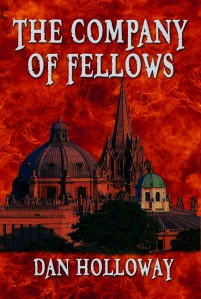
[caption id="attachment_326" align="aligncenter" width="201" caption="download my bestselling The Company of Fellows. It's just 70p"][/caption]

There's a good reason for that. We have genuine success models. We have Amanda Hocking and John Locke (we also have the same white elephants we always had - the likes of Konrath and Leather: as established figures, they as irrelevant as Radiohead and Nine Inch Nails). They made their name through Kindle. Not Smashwords. Not even really Scribd. They made their way, in other words, not by being free but by being cheap. AND they made their way not by building a following of 1000 fans each willing to pay a lot, but by selling lots of very cheap books to a gazillion people.

So, are Kelly and Anderson irrelevant now? Does free have a role in a writer's plans?

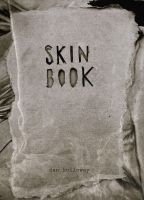
[caption id="attachment_325" align="aligncenter" width="144" caption="Download my adult full-length poem SKIN BOOK. It's FREE"][/caption]

I want to make some points. Debate can follow later, along with rabble-rousing (I feel the need to get more opinionated again. Endless diplomacy sits ill!), so for now just a few points:

  • freemium is essentially about this question: how do you monetise free? In Predictably Irrational, Dan Ariely makes a strong case that there is a qualitative psychological difference between free and cheap. I'm not overly interested in how readers *value* books in a moral sense (that's a red herring that's used to beat people with the guilty stick), but it does mean that monetising free may be considerably harder than monetising cheap - Amanda Hocking's $0.99 intro to a $2.99 range is savvier than using free in the hope of gaining paid.

  • If freemium is going to work, I think we need to look at both high volume and high price for the ultimate paid product. If there is a qualitative jump between $0 and $0.01 then if there is a place for free, it might as well be for introducing people to a $9.99 product or a $99 one as a $0.99 one. Whilst using low pricing will not work as an introduction to much higher multiples.

  • At the moment most indie writers who make it are doing so through Kindle. They don't get to offer their books free on Kindle - at least, they can't wake up and say "today my book will be free" as they can on Smashwords. This may be skewing our view of the value of free. Publishers haven't had much luck taking on indies with marketing dollars. They are beginning to leverage free on Kindle. That's a space really worth watching.

  • People may not read free books, but that may be irrelevant. What free can do is use volume downloads to inject a book into a distributor's search and recommendation algorithms. When they begin to charge that can be worth as much as word of mouth from the free downloaders. It ensures a minimum mass of paid readers who can then seed word of mouth recommendation if the book is up to scratch.

  • Free is not just about freemium. For some writers (with my performance pieces and some of my other work, me included) being paid is not only not the ultimate goal, it's not any goal. The goal is bringing your work to an audience who otherwise wouldn't have access. Free may not be sufficient to do that. It may still be the best policy to work free as though you were going to monetize - and then not go the final step. So, advertising on the Kindle forums and Kindleboards as well as publishing to Smashwords, targeting Nook, where you can choose to make your work free

  • loyal fans remain the key to long-term security. If you use freemium or if you use cheamium, the aim is not to sell lots of copies of this one book, it's to sell enough in the long term to make a living. My inkling is there's an algorithm linking fanbase to price and longevity (people who are fans of your work at x price will be y in number and will remain loyal for z years). Finding this balance will vary genre to genre, and is our quest for the philosopher's stone.

  • Think of free as the first step to more than monetisation or volume. I'm going to bold the next bit because I have a feeling it's key. Looking for free-to-paid and free-to-volume interfaces is a reactive and restrictive strategy. You are limiting yourself to what has worked and what has been shown to work and closing yourself off to things that might turn out to work very well. If you believe in free, look for ways to be free, and see where they lead. Be proactive. Following established models is great. And I wouldn't advocate making exceptions your primary strategy. But don't be closed, be open. There are lots of ways to be free. If you think free works, seek them out. Make your proposition not "My books free, how can I tell people and how can I monetize it?" but "How can I give my work away?"

    [caption id="attachment_327" align="aligncenter" width="300" caption="If you like my books you'll love this novel. It's just £2.14"][/caption]


At the time of writing my book The Company of Fellows is #125 overall paid for Kindle UK at 70p There is a lot of my work available for free on the web. Try Year Zero Writers and its Dan Holloway tag for almost all my shorts and poems for free.

Friday, 23 July 2010

Not for (self/vanity/e/un)published writers

I've just started a small press. All very exciting and more anon but this post isn't about publicising that. Rather I wanted to focus on the primary reason for setting up eight cuts gallery press. I want a pplatform for creating some hoopla about the amazing writingout there that will never be a sure fire enough mass seller to land a mainstream deal without being substantially rewritten. And part of that platform creation is entering amazing books for top literary prizes.

That's a bit extreme, isn't it? Setting up a whole press so books can be entered for prizes? Afetr all, the Booker Prize, for example, is open to the best novel published in the UK, so people can just send their own in?

Well, no. It's awarded to "It will be awarded to the author of the best, eligible full-length novel." And in taht sentence is a whole world of things the literary world frankly needs to get its act together about.

Most writers will have entered a competition at some point, and will know that, in general, they are for previously unpublished work. The Bridport Prize, the acme fo the short story and poetry comp world, defines entries "must never have been published, self-published, published on any website or public online forum, broadcast nor winning or placed in any other competition." OK, no one wants recycled stuff wandering off with top prizes (er, I guess, though as an author who regularly posts my work online and on critiquing sites I find the rule perplexing).

Fine, so if we've put our stuff out there at all, we're published. We no longer have first rights, blah blah, end of. So, whatever we put out there we can enter for a competition for the best book that's been published, right? Wrong. The Booker rules state "Self published books are not eligible where the author is the publisher or where a company has been specifically set up to publish that book."

So published means something different in each case. You can see the Booker Prize's point, though, can't you? They don't want every Jane, John and whoever entering their precious pile of crap. After all, other competitions designed to find the best of the best have similar restrictins. You can't just enter your local football team for the FA Cup. Or pitch up as a golfer and hope to qualify for he Open. Oh no, wait that's wrong. You can.

So what's going on? Well, I'm not going to claim there's some kind of cabalistic conspiracy to keep us alternatives out. There isn't. Aside from anything else that would be to attribute to "the mainstream" a level of organisation it's just not capable of. Rather, it's systematic of an inbuilt prejudice that runs so deep it's barely even noticed.

The fact is it's just assumed in the mainstream that we know what publishing is (and assumptions are illustrative of the worst kind of prejudice). Only then us slippery awkward independent types come along and point out that means we're published, and we can play in the playground too. And each time that happens, a new lock is put on the gate to keep us out.

So we have two choices. We can either simply play in our own playground. Or we can keep breaking the locks and point out that something is amiss. I am greatly greatly in favour of the former. It's what I do at Year Zero, and what I'm doing at eight cuts gallery. But it's not entirely fair on the reading public at large for them not to be aware what's happening, unseen, to keep books away from them (admittedly most of them are awful, but that's not the point, the point is they are not being told they are there at al).

Which is where eight cuts gallery press comes in, a press set up for the express purpose of not hiding exciting alternative books under the carpet, and making our literary elite, our gatekeeping judges, not just ignore but actively reject them. Or, of course, say that after all they might actually have some value. But surely that would never happen...

Charcoal by Oli Johns and The Dead Beat by Daisy Anne Gree will be appearing at major competitions near you in 2011.

Monday, 14 June 2010

An inspiring author across media

On #litchat a week or so ago, I came across Cendrine Marrouat, an inspirational self-published author who works in performance, photography, and video as well as literature. It was exactly the kind of approach that excites me about writers, and Cendrine was kind enough to let me ask her some questions.

1. I get an immense sense of calm from your website. Can you tell me about the central message you try to convey through your work?
First of all, thank you very much for interviewing me. I am honored. And thank you for the compliment.
Through my work – poetry, freelance writing, photography and spoken word – I try to convey an uplifting message of peace by focusing on topics about which a lot of people are reluctant to talk. One of them is death. I even wrote a book on it.
Life is beautiful. We can only be happy if we embrace our fears.

2. I'd love to know why you took the decision to self-publish.
I have always been of an independent mind. I like to do things myself and I rarely rely on third-party help. I am a perfectionist and can spend hours polishing up small details. When you are cognizant of Photoshop, you can create great covers yourself. And Lulu provides excellent quality. I have heard a lot of people complain about them, but in my case, I only have nothing but great things to say.
However, self-publishing is not for everybody. A lot of authors do not realize that writing and publishing a book are the easiest things in the world. Marketing and promotion are the killers.
So for writers like me, who have a lot of patience, do not mind spending hours doing research and working a lot, and love to learn new things, it is an excellent choice. Self-publishing really works in the long-run.

3. You work in many different media. Do you find this helps your work, and if so how, or do you find that the different strands detract from one another?
As the Winnipeg Art Examiner and Winnipeg Spirituality Examiner, I have to write like a journalist and follow the Associated Press guidelines. With WAGTi Media Group and WAGTi Radio, it is a mixture between blogging and journalism. I also have had my blog for a couple of years. I wrote two plays and a few short stories, and dabbled in novels. Of course, I write poetry. I am an aspiring photographer with a focus on natural settings; and I do spoken word.
So, these different media help me define my unique style and force me to question my purpose as an artist. As a matter of fact, they complement one another.

4. There is such a distinctive feel to your site, I'd love to know what someone could expect who went to one of your live events.
Why, thank you!
Unfortunately, I have not had the opportunity to perform yet. And that is why I recorded a spoken word album. Here, in Winnipeg, Canada, nothing much happens on the poetry scene. There are a few spoken word events but they are not promoted well. Often, you hear of them after they happened. However, I would love to perform someday soon!

5. Do you think it's important for writers to perform their work? Do you feel it adds something that isn't there on the page?
I think that a real artist will always try to give his or her audience/readers a unique experience. So, ideally, I would say yes. It helps get the message across better and allows an artist to promote themselves in a more effective manner, I think.

6. Would you like to say a bit about what you have just finished working on?
My new collection Five Years and Counting. A Journey into the Mind of Soul Poetry will officially be released around August 2010. This book is unique. I regrouped more than 150 poems and put them in a specific order. I see poetry as a reflection of the human mind and as such, I wanted to highlight the most important stages in a person's life: birth and childhood, teenage years, adulthood and finally, elevation. This last stage is really about how understanding the meaning of life and death can help anybody let go of their fears and start to enjoy life to the fullest.
Right now the book is only available to members of the Five Years and Counting fan page on Facebook. Anybody can join and take advantage of the offer: http://www.facebook.com/fiveyearsandcounting.

7. And what will be coming next?
I have a second spoken word album in the works. For the first CD, I worked on my own, and recorded everything but the music at home. The music was provided by three amazing composers. This time, I have asked some incredibly talented spoken word artists, musicians and singers to collaborate in part on the project. I gave them free reign to interpret my poems; and the results so far have been amazing. This album should be released around the end of 2010.
I have also started working on a series of monthly Vlogs to help writers, especially beginners. I remember when I started five years ago, I could not really find anybody to give me advice; and the Internet was kind of confusing. Now, after many trials and errors, and a lot of work and research, I am quite knowledgeable on the topic. My first Vlog was on "good content": what is it and how do you provide it? People can view it on my YouTube channel (http://www.youtube.com/soulpoetrysite).
I am also looking for artists (writers, authors, musicians, etc.) in Manitoba, Canada, who are interested in being featured for my Winnipeg Art Examiner column. Feel free to contact me at info@cendrinemarrouat.com.
For more information on what I do, visit my official website: http://www.cendrinemarrouat.com/. For every purchase in the Books & CD section, I donate a dollar to a selected charity.

Tuesday, 1 June 2010

Interview with an Inspiration

For those of you who don't know her, Shayne Parkinson is the author of Sentence of Marriage, a beautiful work of historical fiction that's the 6th most downloaded book of all time on Smashwords from over 11,000. I was delighted to have the opportunity to speak to her about how she has managed to achieve this in such an unassuming yet effective way.


You can find out about Shayne on her Smashwords profile, and her website, and you can follow her blog.

Sentence of Marriage (read a recent review here)

In 19th Century New Zealand, there are few choices for a farm girl like Amy. Her life seems mapped out for her by the time she is twelve. Amy dreams of an exciting life in the world beyond her narrow boundaries. But it is the two people who come to the farm from outside the valley who change her life forever, and Amy learns the high cost of making the wrong choice. Book 1 of "Promises to Keep".

A huge thank you to Shayne:


1. Why did you decide to self-publish?
I've never tried the traditional publishing route. I write mainly because I enjoy the company of my characters, and want to find out what they're up to. Cool observation of the process of seeking publication (especially in New Zealand, where very little fiction by unknown writers is published) suggests to me that if I *did* try I'd plunge myself into a cycle of ill-founded hope, well-intentioned but quite possibly ill-advised rewrites, and repeated disappointments. I decided to skip the disappointment stage.
But I *do* love having readers. In the early days of my writing, this meant manuscripts passing around to friends and acquaintances and friends of acquaintances. Now I can use the wonders of the Web to distribute on a grander scale.

2. Having made the decision to self-publish, you have focused very much on e-publishing. What was the reasoning behind that?
I didn't actually start with e-publishing, though it's certainly where I am now. I first encountered self-publishing when an online friend of mine mentioned that she'd put a novel on Lulu. It seemed a good way of making print versions of my work available to people who'd expressed a desire to have a copy of their own, and that's what I used it for. Print-On-Demand for long books like mine is an expensive option, and my print sales have never been above a trickle.
I came across Smashwords last year. I loved the enthusiasm and energy of its founder, Mark Coker, and his determination to make self-published e-books available on an ever-increasing range of platforms. With e-publishing, it's no more expensive to produce a 600-page book than a 200-page one, and there's no postage to double the price of my print books. The tyranny of distance no longer rules.

3. You write historical fiction, and it has always seemed to me that this lends itself very well to your approach, both because it has a loyal, genre-based following, and because HF books tend to be longer than average, meaning the price of a self-published paperback will be relatively high. How effective do you think your approach is for authors working in different areas?
That's an interesting observation, and you're quite right regarding length and price. I can't comment with any authority on other genres, but I won't let that stop me.
Fantasy also tends to be long, and seems quite well-represented on Smashwords (my husband has a couple of fantasy novels there, so I keep an eye on the genre). Science fiction, too, seems to do well as e-books (and the one full-length novel on Smashwords with more downloads than mine is SF). Romance has a very visible e-presence, perhaps because romance fans are often voracious readers. They're certainly well-served by some very smart sites.
I'd wondered if historical fiction readers might be less enthusiastic about adopting e-reading than followers of more tech-y genres, but that doesn't seem to be the case, going by download figures. Liking to read about the past isn't the same as wanting to live there.

4. You have made the decision to make Sentence of Marriage free, but to charge for other books. Can you explain the rationale behind that.
I'm an unknown writer amid a plethora of unknown writers, and using a medium where people are used to finding vast amounts of free content. Even a cost of a few cents can be enough to put people off if it means registering with a new site, remembering where the credit card is, etc. By making Sentence of Marriage free, people are far more likely to download it. Most of those people will never get around to reading it, of course (some people collect more or less every free e-book they come across), or will take a look and decide it's not for them. But quite a few get entangled in my web, and find they have to read on.
I did originally charge for Sentence of Marriage as well, and sales were more of a drip than a trickle. It didn't take long after I made it free of charge for sales of the other books to reach the hundreds. The fact that I'm now making a modest amount of money from my books means I can justify spending more time writing, and no longer need to subsidise my research costs with my "real" job.


5. Sentence of Marriage is the 6th most downloaded book on Smashwords, a site with almost 12,000 titles. How did you manage that?
I'm as surprised as anyone else! I'm also delighted. It still feels like a compliment every time someone downloads a book (and there have been over 11,000 downloads now, so I feel very complimented).
Marketing is not something that comes naturally to me, but I do like talking about my books. I've been lucky enough to have enthusiastic readers who've encouraged others to take a chance on an unknown. Probably the biggest single factor has been an unexpected bonus of making Sentence of Marriage free: it then got listed in several directories of free e-books. That was when I first started seeing a big increase in downloads, and it's a trend that's continued.

6. Your book has attracted a lot of very positive reviews. How easy did you find it getting people to read and review a self-published e-book?
Many review sites do say "No self-published" and/or "no e-books"; probably the majority of them, in fact. But I think this is gradually changing, especially regarding e-books, and it's worth looking for the exceptions. Some sites do specialise in particular genres, or perhaps specialise in *avoiding* particular genres, and of course it's important to check that before submitting.
I've had very nice reviews from formal review sites, and I've also been fortunate enough to have some lovely ones on Smashwords. Almost all the Smashwords reviews are from people I've had no contact with, and have no idea how they found the books - I wish I did, as I could thank them properly! I've also come across an occasional review in blog entries from specially generous readers, and I'm sure these have sent people my way.

7. What would your three top pieces of advice be to those thinking of doing what you have done?
- Trite though it sounds, make your book the best it can be before you unleash it on the world. Share it with people who'll give you their honest opinions, take note of their responses while respecting your own gut feelings. Polish, polish, polish. Don't give ammunition to the people who disparage self-published work as full of typos and grammatical errors, and inevitably poorly edited.
- Be visible, but don't be a pain. People don't appreciate having their forums or blogs invaded by people who are only there to blatantly promote their books. I've found a couple of friendly forums where I enjoy chatting about books and about life in general; if I didn't feel I wanted to interact with these people, I'd just slip away quietly.
- Make the most of what the Web offers. Use tools like Google Analytics and Google alerts. Make judicious use of hyperlinks; for example, in my books I put a link to my website, where I have family trees and some historical background to the books' settings. Blog, but don't try and make your blog a clone of anyone else's. When I started mine, I vaguely assumed I'd mainly blog about the writing process. I soon realised that there are squillions of other blogs out there where people make a better job of that than I would, and the world does not need to read my love song to the adverb.


8. What next for you?
I'm looking forward to Smashwords books being available in the Kindle store, and to getting sales figures from partners like Barnes & Noble. As for new work: one thing I'm never short of is ideas. I have a work-in-progress; unfortunately I'm possibly the world's slowest living writer, and it's likely to be at least a year before it's finished. I have plots in various stages of development for at least half a dozen after that. I've plans for research trips to various parts of the country, including some places I haven't been to since childhood. I have vague plans for making an audiobook, and have made a small start towards that. My head continues to be full of characters clamouring for attention, and I continue to enjoy letting them tell their stories.

Tuesday, 4 May 2010

Dear Dylan

STOP PRESS: May 12th - Dear Dylan is on the long list (of 12) of the Young Minds Book Awards! I hope this will inspire other self publishing authors. You can get more info about the comp at www.youngminds.org.uk

Many of you will know Siobhan Curham as the author of the fantastic self-publishing column in The Writers' Forum. Others of you may know her through the super Literature Lounge, one of London's coolest literary nights. But she is also a great author, and recently turned down a deal with a mainstream publisher to self-publish her new book Dear Dylan, which explores what happens when a fourteen year old girl turns to the internet for solace and strikes up a correspondence with a stranger. I had the chance to ask her all about it. Oh, and to get your hands on Dear Dylan, just go here.


I'm intrigued by the self-publishing angle. I have three mini questions about it. I wonder if you'd be prepared to say a bit about the deal you turned down; could you explain why you chose self-publishing for this book; and will you be seeking a mainstream publisher in the future?

After my three novels with Hodder I had been left feeling a little disillusioned with the traditional publishing world. Although I will always be hugely grateful to them for publishing my books I was left feeling very confused and upset by the lack of support they gave me when it came to the marketing of my books. I have subsequently discovered that this is quite a common occurrence with the large publishing houses and they only seem to put a substantial marketing budget behind an author once they have established a decent sized readership. Anyway, this experience and the rise of self-publishing led to me choosing to self-publish my fourth novel, Finding the Plot back in 2007. My reasoning was that if I was expected to do all of my own marketing anyway would I be that much worse off going it alone? Shortly after I finished Dear Dylan a friend told me that a traditional publisher was looking for new writers for its young adult list, so on a whim I emailed the opening pages and synopsis to the commissioning editor. She got back to me straight away asking to see the whole book and within a week I had been offered a book deal. I was over the moon to get such a quick and positive response from the first person I had sent it to. In the end I was offered a deal for two books. I felt I had built up a very good rapport with the editor and that she really understood me as a writer. However, I was hugely disappointed when I finally received a contract and saw that my advance and royalties were substantially lower than I had been promised. It was the first time I had represented myself rather than going through my agent and it was a real eye-opener. Thankfully I had my contracts from Random House and Hodder to compare it with so, using them as a guide, I sent back an amended version more in line with what I felt I deserved. The publishers upped their offer but it was still nowhere near what I felt it ought to be. A friend of mine who works at United Agents said that publishers will always try and take advantage of authors acting on their own; it was standard practise. This made me really angry. It seemed to be yet another example of authors being shoddily treated in order for publishers to make a quick buck. I know I could have continued to haggle or even taken the book elsewhere but I really didn’t have the stomach for it. Back when I started out as a writer I had very little self confidence and was so grateful just to be published I put up with being poorly treated but not any more. So I withdrew Dear Dylan and took stock for a while, trying to decide what to do next. Then it hit me - I had written Dear Dylan to try and help people going through difficult times in their lives, it had never been about making money or a name for myself, so why not give it away for free? As self-publishing editor for Writers’ Forum magazine I had been really inspired by a writer called David Moody who had given away his first novel as a free download and ended up getting half a million readers. What if I could do the same with Dear Dylan? As soon as the idea took hold I knew it was the right way to go – giving the book away seemed totally in keeping with the ethos behind it and it felt liberating to stick two fingers up at the publishers who had quite frankly been happy to shaft me financially. I would never say never when it comes to traditional publishers in the future, but for now I am happy to self publish as it feels like a far more positive and proactive option.

Could you explain why you chose to self-publish with Authorhouse, and what the package they provided you with involves?

I chose AuthorHouse because they were the self-publishing company I had used for Finding the Plot and I had found them to be extremely professional and reliable. I went for their standard package, which costs around £800. This price includes turning your manuscript into a book, cover design (although I paid for my own cover design privately) an ISBN and distribution through Gardners (the UK’s largest book distributor) thereby ensuring your book is available to order through any UK bookstore and on Amazon.

I love the subject matter of Dear Dylan, however online networking and young people can be a very emotive subject. What led you to focus on an email correspondence between a teenager and a much older adult stranger in the book?

As the mother of a teenage son I am all too aware of the dangers the internet can pose to young people. However, I also feel very strongly that we can over protect our kids and that the internet can actually be an extremely positive forum for them. One of my favourite books of all time is Goodnight Mister Tom which focuses on the friendship between a young evacuee and a much older man. As a writer I wanted to explore a similar relationship as it develops and show how both parties benefit. I think teens can get a really bad press and I wanted to redress the balance by showing how the energy and enthusiasm they possess can have a really positive effect on older people. There is also a certain irony in the book in that the only real danger to Georgie actually comes from her home life and not in the friendship that she forms online. I didn’t set out to make this point deliberately, but with hindsight I’m kind of glad that Dear Dylan does make it. Despite all of the negative press the internet can get, the fact remains that most kids are far more at risk of being damaged in some way by their families and home lives than so-called ‘stranger danger’.


How difficult was it to write Dear Dylan in a way that engages rather than preaches to the audience, and how successful do you think you've been?

Maybe that’s a question for the readers! But as a writer I loved the freedom the email format gave me. Once I had the characters fully fleshed out in my head it was really enjoyable to write. Emails are often written in a relaxed, almost stream of consciousness style and I loved the way that enabled me to get into the flow of the character’s voices, particularly as they start to open up to one another. I was very aware that I didn’t want the older character to come across as preachy or completely sorted, as I think it would have been quite patronising to younger readers. The main objective for me was that both characters really learn and benefit from each other. And certainly from the initial feedback I’ve been getting from readers this seems to have come across.

I love the cover. How important do you think covers are for self-published authors, and could you tell me about the process of producing yours?

Thank-you, I can’t tell you how relieved it makes me to get positive feedback regarding the cover! I think getting the cover right is an absolutely essential part of the process, whether you are self-publishing or not. I received some awful feedback from readers and bookstores regarding the cover of my second novel with Hodder and it was absolutely soul-destroying. People say ‘don’t judge a book by its cover’ but of course we all do. When it comes to self-publishing writers are already at a disadvantage as there is still a lot of snobbery in the book world, especially in the UK. I think it is therefore vital that, if you want your book to be taken seriously, you put maximum effort into the presentation. I did a lot of research into book covers prior to Dear Dylan and I paid a professional book designer called Michael Hill to do the artwork. I wanted something striking that would appeal to both teenagers and adults and that summed up the themes and mood of the book. I was extremely happy with the end result and another really great thing about self-publishing is that you have complete creative control over the cover. It was a fantastic experience working with Michael on his ideas.

I gather you're planning to give this book away in eformat. Could you tell me how you're going about ensuring as wide a distribution as possible, and what you're personally doing in the way of promotion?

I’m giving the book away as an electronic download via my website http://www.siobhancurham.co.uk/ and I am planning to do the bulk of my marketing online; I have set up a Facebook group called Dear Dylan and I will be publicising the book on blogs, forums, websites etc. I will also be doing Dear Dylan workshops in schools and I have entered the book into a competition. The book ‘1001 Ways to Market your Books’ by John Kremer is also proving really useful when it comes to publicity ideas!

What next?

I am about to start work on my next novel for young adults called Finding Cherokee Brown as well as working flat out on publicity for Dear Dylan.

Monday, 5 April 2010

A Small Press says "Yes"

More and more that's something I'm hearing writers say - their ms has been accepted by an exciting new small press. They're not asking money up front like a vanity publisher. So this is fantastic! Isn't it?

We are at a time when the publishing industry is catching up much of the rest of the world in realising that aggregation and merger are outmoded business models, and small, independent and flexible are the way forward. This is creating fantastic opportunities for new small presses. But, like all booms and bubbles, 95% of these new presses will fail, and do so quickly - through plain natural selection (in many cases, where they have not thought out a new business model that isn't successful/lucky, the issue will simply be - as always - undercapitalisation).

The future failure of so many new presses creates a very real problem that writers need to be aware of - when the business goes bust, their book (or the rights thereto) will be one of that business' assets - the chances of the author getting their rights back in a hurry are minimal (and the assurances of the lovely people who run the press are irrelevant - once they're wound up it's not up to them, it's up to the banks)

It's so early that we really don't know who the charlatans and incompetents are, and who will emerge victorious, so all we can do if considering a new small press is be as savvy as we possibly can. I would recommend considering the following checklist of questions:

1. There are many many more books than shelf slots. You may have experienced rejection after rejection. If someone approaches you it's flattering, but PLEAS, be self-aware enough to ask why. Have they really spotted what everyone else missed? Quite possiblyso, but almost certainly not.

2. Following on, if I were approached, i would want to a. make sure the contract protected my rights so they reverted to me in certain timeframes/scenarios and b. look at their business plan. You should, of course, discuss the publisher's business plan before signing even if they're HC, but in cases like this I'd want forecasts and figures, and if I didn't feel confident analysing them, and didn't have a manager/accountant to do it for me, I'd walk away.

3. Remember that submission followed by instant acceptance can amount to the same thing as being approached directly - like a cynical, jaded lover ask yourself, and them "why so keen?"

4. Always always always go to sites like Writer Beware and Absolute Write. DO remember that negative feedback can be as unreliable as positive, but consider any comments.

5. Use google - for two reasons - to find out what people are saying about them that may affect your decision, and to see just how wide their web footprint is

6. Consider approaching a reputable independent editor like Maria Schneider or Nicola Morgan. Ask them if they consider your book shelf-worthy, and if they say no, think carefully.

7. It's hard in a global age, but meet these people if you possibly can. This is a people business, and as a writer your instincts about people aer probably fairly good.

8. This should be obvious, but it may not be - ask to see the other books they're publishing. For new presses there may not be any on the shelves - ask to see the mss. Consider the following factors - 1. Does your book fit alongside these? It would be pointless, for example, for me to have The Man Who Painted Agnieszka's Shoes published by DIIArts - it just doesn't fit with their other books, and would get lost amongst them. It would fit very nicely in the portfolio of To Hell With Publishing, though - if a press is REALLY new, you need to talk serious turkey with them on this - it may be too early to tell what the feel of the press is (their website's "look" will tell you a lot, though - take a look at www.moxiemezcal.com for example - I KNOW my book would fit there) 2. Are the books any good? I would never really feel comfortable joining a group where I wasn't the weakest member (at Year Zero, I've got very lucky - because I do the tech donkeywork they let me hang out and put my writing up), but I do have a Groucho Marx approach - if they're right for me because it's such a strong portfolio, why would they think I'm right for them.

9. If you still like the idea, ask yourself: could I do what they're doing myself and would I want to? That doesn't mean, for example, "could you edit your own book?" You couldn't. It means "could you find an editor suitable and work with them?"

For me, number 9 is the one that clinched it. I know I can do as good a job as anyone I've come across for my particular brand of weirded out underbelly scuzz. And I love doing it. I REALLY love it.

Saturday, 13 March 2010

Hold a Self-publisher to account: Month 6

Wow! How quickly 6 months go by! Later in the month I will complete a 6 month review, but for now, here are the stats from February. Apologies for the delay. I am now Officially Back :)

Downloads: 256 (forecast 400)

Sales
Lulu direct

Bookstore: 2

Direct from me

Total: 2 (forecast 12)

Events

4th - Rough Trade gig

7th - write-up of Rough Trade in Young's Literary London blog

19th - publicity for teh gigs on Authonomy blog

23rd - To Hell With Books gig

25th - write-up of To Hell gig
AnalysisBold

This was a disappointing month in terms of figures, and it has taught some valuable lessons, that I hope to start learning straightaway. To wit,
  • book readings do not always produce sales. Rough Trade was significantly more productive for all of us in terms of sales than the To Hell With Books gig, but that is not necessarily indicative of value. There are so many intangibles with readings, such as teh people who say nothing but go away as fans, taht it is impossible to quantify their value, and possibly wrong to think of them in terms of sales potential. We now have our books for sale at both venues, and that may, in the long run, be the most valuable thing of all.
  • focusing on the readings alone took up so much time that I was unable to do any other real promotion for the book which was certainly detrimental. There is a balance to be struck between focus and having a broad portfolio

Forecast

Well, I know now that I've already had some more sales that I hadn't been expecting, so this is slightly artificial, but I will forecast 8 sales, and will stick to 400 downloads in the hope that the spike at the end of February continues, and in anticipation of, I hope, some good results from Read an ebook week, from March 7-13th, which is being heavily promoted on Smashwords.

Wednesday, 17 February 2010

Newsflashes

Gosh, what a busy time it's been, hence teh humungous apologies for the lack of posting. I hope to make up for it now, with some meaty posts coming up on subjects like censorship and confessional literature. But first some updates!

BUYING MY BOOKS!
Has never been easier! I've compiledd a handy guide to where you can buy the physical copies of my two books - either online or from bookshops

SONGS FROM THE OTHER SIDE OF THE WALL
bookstores:
The Albion Beatnik, Walton St,Oxford, UK
Rough Trade East, 91 Brick Lane, London, E1 UK
Camden Lock Books, Old Street Station, London, UK
Jaffe & Neale, Chipping Norton, UK

online:
Lulu
Rough Trade

SKIN BOOK
bookstores:
Rough Trade East, 91 Brick Lane, London, E1 UK

online:
Rough Trade

Not forgetting FREE DOWNLOADS
Songs From the Other Side of the Wall
SKIN BOOK

And from next week To Hell With Books at 10 Woburn Walk in Bloomsbury will be added to that list.

GIGS!
On Feb 4th Year Zero had an amazing gig at Rough Trade East on Brick Lane, with music from the fab InLight, Jessie Grace and To The Moon

And on 23rd Feb YEAR ZERO UNPLUGGED AT TO HELL WITH BOOKS will be our most daring gig yet

To Hell With Books is the bookstore part of To Hell With Publishing, one of the most exciting outfits in literature. Specialising in special editions, poetry, art, zines, and the uber-literary, they are a publishing press we actually love – and that’s like being a beloved carpaccio at a vegan dinner.I even blogged about them.

It’s an intimate setting, and a timetable without constraints, so to do our hosts justice, we’ve put together the following feast of unplugged delights for you. Come, listen, buy:

Dan and Daisy dueting Daisy Anne Gree’s Conversation in a Basement on 17th and Mission, in 1998
Penny Goring reading Bone Dust Disco
Daisy Anne Gree
Dan Holloway performing a world premiere of FREAKSHOW
Marc Nash performing “Non-Smoker” & “Meathook Carousel” from “A,B&E” plus “Mother-Daughter Coagulate”
Larry Harrison
Readings from Ali Cooper’s forthcoming The Girl on the Swing
PLUS: An acoustic set from the brilliant blues singer-songwriter Jessie Grace

MAILING LIST!
Year Zero has a mailing list!

We have no desire to spam you. On the other hand, we realise things can get lost in the blog, and we do like to give you freebies. So, from April 2nd, we will be sending out a monthly newsletter that will contain:


- what we’re up to in the following month – readings, publications, all sorts
- what was posted the previous month, with excerpts
- what we’ve been up to – reviews, write-ups of events, links to videos etc. - where to get hold of our books – in the real world, online, and as free downloads
highlights from our personal blogs


We will probably run a full e-newsletter every other month, with a digest one in the intervening months, depending upon our time – and yours. We may even run some writing comps.
To subscribe, simply e-mail yearzeromaillist@googlemail.com and put “subscribe” in the subject line


We will ONLY send you the monthly newsletter unless you initiate correspondence. We will NEVER divulge or shgare your e-mail address (even with ourselves, as it were – so if you sign up for newsletters from Year Zero you won’t suddenly find yourself on Marc or Dan’s private mailing list). All information will be handled in accordance with the 1998 UK Data Protection Act. You may unsubscribe at any time simply by e-mailing the above address with “unsubscribe” in the subject line.


Some writing by Year Zero Writers may be unsuitable for minors – by subscribing to our newsletter you are affirming that you are of a suitable age to access such material. Year Zero Writers will not be responsible, jointly or severally, if this is not the case.

Sunday, 7 February 2010

Hold a self-publisher to account: Month 5

Stats

Downloads

Smashwords: 336 (forecast: 400)

Sales:

my orders from Lulu: 25

bookshop: 0

direct from Lulu: 11

total: 11 (forecast 5)


Events
(addendum to previous months) - I made two interesting discoveries that may explain previous months' activities. First, I received a positive review from the Oxford information hub "Daily Infornmation" in the middle of November - although there is no obvious correlation to a spike in downloads.

Second, in the last week of December, Songs was listed in ebooksjustpublished's top 10 DRM free ebooks for Christmas - I'm fairly sure that was the reason for the spike at the end of December.

late Dec/early Jan - my old college alumni newsletter went out with a long article on Songs

15 Jan Discounderworld ezine writes a piece on me and on Year Zero Writers

mid Jan - Writers' Forum print magazin carries a follow-up piece on me in Siobhan Curham's self-publishing column


Analysis

It was always going to be a slow month. I spent every spare second building up for the tour that started on Feb 4th. Two things are of particular note:

1. The efictionbookclub closed down the week before it was due to read and review Songs. Obviously this was a big blow. I wish the people behind it all the best in future, though - the jobn they did whilst the site was running was fantastic, and an excellent model.

2. There was an enormous spike in both Songs' downloads, and those for 13 Shadows, on January 13th. I have absolutely no idea why. As it affected both books I then had on smashwords, I am guessing it was related to smashwords, but I don't know how - it's too early for it to be aggregated first quarter downloads from Barnes & Noble - if it happens that date in a month/quarter's time I will be clearer that it is an automated aggregation of something!

Also worth noting that 10 (but not the 11th) of the Lulu sales were from a single family member for use as presents.

Forecast
I DO have hopes for February. I've got some significant local news coverage confirmed, and we are on tour, with two big gigs that I hope will kick start sales, or at least downloads. The first, at Rough Trade East, was on the 4th. Next up is To Hell With Books on the 23rd. I'm also hoping we might get some write-ups and general web coverage out fo the tour, and want to make sure the sales and downloads are mentioned there.

So:

downloads: I'll go with what I hope is a cautious 300, in case the web tie-ins don't run as smoothly as they might

sales: 10 - largely from live readings

I HOPE both of these are cautious

Wednesday, 20 January 2010

Dear Publisher

Thank you for sending me your contract for consideration. I am sure you will appreciate that talented authors receive many unsolicited contracts. Nonetheless, I am aware that a publisher like yourself relies upon discovering new talent in order to keep its lists fresh and win new readers, so I hope that you will not be too disappointed that in this case I am declining your kind offer. I wish you all the best in seeking exciting new talent elsewhere.

I understand that it is frustrating to receive a form rejection from an author, without any elaboration on specific areas to work on in your contract. I hope that the following general points may help you in your future submissions.

1. An author relies for their living upon a day job. They write, edit, and network in the evenings, at weekends, and in lunch hours and teabreaks. A publisher's advance, the largest incentive for an author to sign a contract, is not sufficient for them to give up their day job with any security.

2. Many talented, exciting authors write work that will not appeal to large readerships. Publishers need to sell large amounts of books. The result of this tension is that many of these authors will fail to recoup publishers' outlay within their first two books, and it will not be viable for publishers to keep them on board.

3. Without a publisher, a writer is under no such pressure, and will not be junked if their initial books "fail".

4. Should a writer achieve initial success wit ha publisher, they will be expected to produce similar works, and not explore or develop their talent.

5. Without a publisher there is no pressure to change for a writer the way they write in order to fit market needs.

6. Without a publisher there is the freedom to experiment, change genre at will, try, fail, try again, fail again, and devlop one's talent, voice, and potential to the full.

7. With a publisher a writer must concede control over cover design, the way their work is presented to the world.

8. The long cycle of the publishing industry means that the time from pen to audience inevitably freezes some of the initial energy and excitement of the creative process, leading to a less real and invigorating feedback process between writer and audience, and a less meaningful feedback loop.

9. With a publisher, a new writer loses editorial control. Not just total control of final cut, but control of which editor to use in the first place. An editor must have two qualities - the ability to be utterly ruthless; and absolute sympathy with an author's aims. An author needs to be free to select their own, trusted, editor.

10. Pricing - whilst unsigned, the author is free to set the price for all their books - and other merchandise. This includes setting the price at free should the author wish to do that with, for example, their ebooks. It also means the freedom to create and price specila and limited editions of their work.

In conclusion, I am afraid that an author must consider not just their short-term but their long-term future. And whilst I am sure that your kind offer, were I to accept it, would put me in a financially more advantageous position one year from now, and possibly three years from now, compared to that if I reject it; I am afraid that the models I have run show that in five, ten, and twenty years - that is, over the course of my career - there is no financial advantage, and in many models financial disadvantage, in my accepting.

I wish you every success in your future publishing career.

Friday, 1 January 2010

Hold a Self-publisher to account: Month 4

Statistics

Downloads:
smashwords - 335

Scribd - 7

Total - 342 (forecast: 300)

Sales:
Lulu direct: 3

Bookshop: 2

Total: 5 (forecast 5)

Events

1 Dec - Words with Jam ezine is issued, featuring 2 columns of mine, both mentioning Songs

1 Dec - Free-e-day

6 Dec - my article on "The Inconvenient Truth About Voice" republished on Publetariat

8 Dec - Songs enters the Smashwords top 50 (the only time I tweet a link this month)

13 Dec - Songs features on Deborah Riley-Magnus' Christmas Shoppnig recommendations

16 Dec - Songs reviewed by Guy Gonzalez on Google Reads - receiving 4 stars

18 Dec - Songs on the smashwords premium catalogue (again?)

18 Dec - Thirteen Shadows Waiting fro Sunrise released

Analysis

I met both targets this month, which was very pleasing. Analysis of the download graphs, though, is confusing. There was the anticipated spike for Free-e-day, and also a (surprisingly large) spike for one tweet mentioning I was in the top 50 on smashwords. But there was a major month end spike, with well over 20 downloads on each of 4 days in the last week of December, correspondnig, as far as I can tell from google, to no particular event - all I can suggest is people at home with new Kindles they want to load up.

The 3 sales on Lulu, 2 of them to strangers (I still have no idea who) were particularly pleasing. I was right that family bought no copies for Christmas, though. I have a feeling, from the timing of these, they may be connected to Guy's review - which is a thumbs up for Google Reads if that's true.

Forecast

I don't have an ISBN as I'd imagined I would - in the end I decided to hold out, and will do so again this month.

I will be fairly quiet promotionally this month because I'm busy arranging the Year Zero live gig on 4 Feb (when I hope to sell several copies) and preparing SKIN BOOK for physical release at the start of February. I will, however, begin teaching creative writing classes at the Albion Beatnik, which may lead to a sale or two, although I will not be actively selling, of course. IMAY also do a reading in Bristol on the 25th. We are also expecting Year zero reviews from Alternative Reads over the next 3 months, but it is impossible to say when this will happen.

On the download front, I am due for read and review at the efictionbookclub in the week of January 7th, which I hope will bring me some independent reviews I can start to use in promotional material. Advance, diligent downloading by the lub's readers MAY, of course, account for the late December spike - in which case do not expect a mini spike in a week's time.

All of which make predictions difficult for January - I am hoping February will be more predicatble with a series of readings and bookshop discussions. I will play safe an forecast 5 sales but push and predict 400 downloads, in the hope that I will receive positive recommendations from efictionblookclub.

Thursday, 3 December 2009

Hold a Self-Publisher to Account: Month 3

Stats:

Downloads
smashwords: 222

Scribd: 6

total: 228 (forecast 200)

Sales
Lulu direct: 2

Bookshop: 2

Me direct:

My copies from Lulu

Total: 4 (forecast 5)

Events
It was a very quiet month as I predicted - not much publicity for my own book because I was concentrating so much on Free-e-day and the new Year Zero books. Significant events were:

4th November - Nylon Mag list Year Zero as their site of the day (a spike of around 300 extra hits to the Year Zero site on the day, that sustained over a substantial period)

4th November - Penny Goring's "Temporary Passport" is discovered on the Year Zero site and will be made into a film

6th review of Songs on Sulci Collective blog

7th - interview with a local journalist

8th flyers for Songs on display at a college alumni event celebrating 20th anniversary of fall of Berlin Wall

9th Berlin wall anniversary. I tweet five or six times, and there is a spike of 200 extra views on smashwords

20th Songs wins the Litchat #litpitch comp on twitter

28th my article on social media appears in issue one of literary ezine Words with Jam

29th SKIN BOOK featured on the Writer's Muse site

Analysis
The downloads were up on expectation - analysis of the daily chart shows this is entirely down to the Berlin Wall anniversary. Other than that I note with interest not a single sale or a download blip as a result of the flyers (although, of course, the 9th November blip may be a result of this and not twitter, but the volume of retweets suggests otherwise). This is significant as it emphasises the importance of a personal presence at these events and selling on the spot rather than through flyer.

In the build up to Free-e-day there was a surge of interest in the Year Zero site and the Free-e-day site, but these did not convert to personal downloads - the results of Free-e-day itself will go in December.

Forecast
I anticipate a busier month but a disappointing one for sales. My personal attention will be focused on the new Year Zero anthology and forthcoming tour for it as well as selling chapbooks of SKIN BOOK. Sales of Songs will depend on whether family buy copies for Christmas. Forecast: 5 - through bookshops as I start to do more instore in preparation for getting the new Year Zero books into shops. I may be able to do further live readings before Christmas enabling on site sales.

I anticipate downloads to be back to 300 after Free-e-day and because I will be focusing on marketing the Year Zero books as a package before Christmas, sending press releases and focusing on magazine forums. Songs will also feature on the Writers' Muse website. There will be a mention of Year Zero in Writers' Forum.

I anticipate a significant upturn in sales in late January as I get Amazon listed - I will finally this week get a Lulu ISBN, a decision not taken lightly but financially necessitated.

NOTES: SMASHWORDS will not guarantee delivery of timely figures for Barnes & Noble downloads. Mark Coker is aware of this column and the fact that I am calling them out over this (and apologising to my readers for any resultatnt confusion), and has, helpfully, agreed to ensure 1. I get figures eventually and 2. that smashwords will work to inmprove delivery of figures. I am as ever grateful to Mark. He is also aware I will call smashwords ut ina big way if they fail to deliver on this. AMAZON figures will not necessarily be timely. I will also call them out when necessity dictates. Unlike Smashwords I doubt they will care

Friday, 30 October 2009

Hold Me to Account: Month two stats of a self-publisher

Stats:

Smashwords: (this month has been much flatter and more consistent - and I've been on holiday so I can't be exact - so I won't give the day by days) 266


My website: 2


Year Zero Website: 1


e-mail requests:


Scribd: 3


Total: 272 (target 300)


Books:

Direct from Lulu: 1


My orders from Lulu: 15


Sold through bookshops: 13


Direct sold by me:


Ordered online from me: 1

Total sold: 15 (target 25)


Significant events:


There were no significant events plugging the smashwords downlaod, as I noted last month. This month I have been gearing my energies to the book launch in Oxford (specific blog on that coming in the week), and launching the blog of the Year Zero website.

At the start of the month, I joined operation ebook drop, a project launched by ex-serviceman Ed Patterson in which authors offer servicemena nd servicewomen free ecopies of their book to put on Kindles so they have something to read on their tours of duty. My involvement is not something I've publicised because it's not designed to promote the book but to help peopel who need books to make a terrible situation more bearable, but it may be relevant. I have had two personal e-mailed responses, so this accounts for at least two downloads.


I have had 3 reviews this month (links from here):
3 October from Scott Pack of 5th Estate who used the phrase "Some moments of genuine promise in this debut novel suggest that Holloway could have a future outside of the world of peer review sites and print on demand"

6 October from DJ Young, who was using the book as an example of "the quality of what can be: ebooks or print-to-order offerings from independent or self-publishers are often maligned as the ghetto of the publishing world. With so many economical changes happening, the idea of the author/entrepreneur who provides direct commerce with his readers is no longer a bad joke publishers and agents can tell themselves anymore."

28 October from Erica Friedman, CEO of Yurikon, the lesbian manga publisgher who said "Songs From the Other Side of the Wall is a *very* good book"


October 10: the Year Zero blog goes live. We have had new fiction there almost every day since, in additionto articles on the craft and nature of writing and a weekly advice column. This has improved our visibility across the web. We are by no means anything other than minnows, but we have gone from around 50-60 hits a day to over 200, and yesterday we had 356


A number of articles came out aboutYear Zero this month, where my name has been mentioned, at Emprise Review, Editor Unleashed, Moxie Mezcal, and Fake Plastic Souks. And on 29 October Digital Book World referred to this monthly column. (All the links are available here)


29 October was the launch for the book in Oxford. It was held at the Albion Beatnik bookstore in Oxford, in conjunction with the album launch for singer-songwriter Jessie Grace, whom I chose because she sings like the main character in my book (she is also brilliant)


On 6 October the book was featured on the Aspiring Mangaka and Writers Club book tour

I was on holiday and utterly inactive on the web from 15-22 October (not pre-announced for security reasons)

Analysis
I missed both of my targets this month. That despite a successful launch (all 13 bookstore copies were sold there, and aroudn 60 people were there on the night) and some favourable reviews.

I am still not Amazon listed after the Published by You debacle on Lulu. I have not been able to afford my ISBNs through Nielsen (more pricey than through Lulu) and have chosen to wait rather than get a free Lulu one. I believe this will hold back sales considerably online.

Nonetheless, I am upbeat about the possibilities raised by the launch and the progress on the Year Zero site. I am planning another event in London in December. Now that I know I can both organise such an event and coordinate with musicians successfully, I will be uch more proactive in seeking regular media coverage. My naming names policy means thatI must point out that my local paper, The Oxford Mail, refused to cover this event, which I find both surprising and highly disappointing, as they have covered previous things I've done (maybe that's why!!). I hope they will be supportive in future, but I also hope my "I don't change policy" means I stick to my guns - I am the same now as I will be if I ever get successful, and my book is the same. I hope I am polite and courteous always when I approach people, and I hope I offer interesting content. If, therefore, I DO ever get successful, media who give me the brush-off now will get the very minimum cooperation from me then.

Coming next month:
My university alumni office has arranged a big event in Berlin celebrating the anniversary of the fall of the Berlin Wall. As this ties in with the book so well, I decided it would be daft not to do something with them. They have agreed to promote the book and I will give them £1.50 from each book sold from Lulu in November and December. This money will be donated to the Student Counsellnig services. If this works and sells some copies, I would like to extend it to causes I care about much more next year,and to whom I can present figures.

I believe a couple more reviews will come out next month.

I will be focusing my efforts on organising and promoting the main Year Zero launch in London, and Free-e-day, and will have little time to promote my own book. On the ther hand, the Year Zero press material wil be much more organised from this month, and will be more targeted, and the book will be included in the "our books" part of the press pack. Nonetheless, in the light of this, and the ongoing ISBN dilemma, I expect November to be a fallow month. So my predictions are:

Downloads: 200

Books: 5

Thursday, 1 October 2009

Hold me to account: Month one accounts of a self-publisher

OK, time for the first month’s report. This was always going to be the most exciting one, because the first always is. So let’s see first what it says; second what happened this month; and third what that means.

So,

1. The stats

Downloads

Smashwords:
(I’m going to break these down day by day because they tell a tale:
3,9,5,17,14,11,8,14,10,10,11,6,15,12,64,25,19,64,14,12,50,25,20,18,22,8,13,9, 14

My website: 2

Year Zero Website: 1

e-mail requests:

Scribd: 9

Total 544

Books:

Direct from Lulu: 3

My orders from Lulu: 25

Sold through bookshops: 1

Direct sold by me: 5

Ordered online from me: 1

2. The calendar (what I’ve done, where I got a mention)

Sep 1 – Farm Lane Books gave me a mention and announced she’d bought a copy from Lulu
Both Jaffe and Neale in Chipping Norton and Albion Beatnik in Oxford agree to stock the book
Sep 2 – One in Four magazine are going to run an ad for Year Zero
Emprise magazine offer to do an interview about Year Zero
Sep 4 Barnes & Noble deal announced by Smashwords
Sep 9 into stock at Albion Beatnik, and a date (29 October) fixed for a reading
Sep 10 3 copies sold to conference participants
Sep 14 invited to guest blog on the Aspiring Mangaka and Writers Club website (and the book will be featured there on 6 October)
Sep 16 listing on Finding Free e-fiction
Sep 21 e-mails form two media figures interested in review copies (names omitted until reviews published, if published)
Camden Lock Books, in Old St Station, stocks the book
Sep 22 ebooks Just Published lists the book
I take part in Operation ebook drop
Benny Platonov is offered free, meaning all 3 Year Zero titles are free ebooks, and we can begin presenting a unified platform
Sep 27 My college alumni office offer me a promotional opportunity (more if/when it happens)
Sep 28 Smashwords is down for about 12 hours
Sep 29 I receive requests to guest blog on 2 writing sites about Year Zero
Smashwords announces a deal with Sony.


3. Analysis

Downloads: The smashwords stats tell some interesting stories. I didn’t think there would be such apparently obvious correlations between downloads and events, but there are. Viz:
- The figures jumped from single figures (before Sep they were also 3-10 in general) to regular double figures ON THE DAY the deal to list with Barnes & Noble went live
- Listings on the web fiction guide and novels online did not meaningfully affect figures (it seems). The listings on Finding Free Efiction and Ebooks Just Published most definitely did – AND had a residual effect.
- When smashwords went down for most of the day, there was – unsurprisingly – a big effect on downloads

Books: These are lower than predicted. I can offer the following analysis.
- I predicted a spike from friends and family sales – largely because this is what “established wisdom” tells us happens with self-published books. This hasn’t happened. With family the reason has been “we’re waiting till we do our Christmas shopping”. Friends – well, I try not to “sell” to friends because it’s distasteful, and most of them haven’t gone and ordered the book anyway.
- Things move slowly. I have had progress in terms of getting agreements to do reviews, but they take a long time coming. The first will be out this weekend.
- I’ve managed to arrange some great book readings. I’ll be at the Book Club Boutique on October 5th, and will have a music and wine and reading night in Oxford on 29th. In other words – these are all in the future.
- I haven’t mentioned above because it has been ongoing, but there have been serious issues with my ISBN and subsequent Amazon listing (several people citing “I’m waiting till it’s on Amazon”). I purchased a “Published by You” package with Lulu, which comes with 10 ISBNs. This was in July. Then, at the start of August, Lulu changed their offer without informing people who’d already bought it that it was no longer available. Customer service refused to answer e-mails. There was no help on the forums. FINALLY this month I found a post on the Lulu blog. I had an e-mail and a refund within 48 hours. Impressive, and worth remembering for people – go to the blog not the usual help channels, BUT leaving me still without an ISBN

Next Month:
Predictions:
Downloads: I will struggle to match this month’s because I’ve had the initial spike from listing on the main efiction sites, and I don’t think enough time has elapsed for people to have read what they’ve downloaded and start spreading word of mouth. I’m saying 300
Books: I am hopeful of 25, based on bookshop sales.

OK, SO NOW GRILL ME WITH QUESTIONS!

Friday, 11 September 2009

10 Commandments for Aspiring Writers

This is an extra post that's really just a reprise. When I first started this blog and had about 3 followers, I began a series called "10 commandments for aspiring writers in 2009". Virtually no one read it because virtually no one knew I was here, but some people who did kind of liked it, so I'm reprising with links here. It's also a nice way of leading in to a new series I'm going to be running in the autumn, a 12-step programme to help writers intending to make a serious attempt at a career of it, starting in 2010, hit the ground running with a proper business plan.

So here, goes, my 10 commandmets are:

1.There is no stigma about self-publishing

2.Marketing is something small groups of like-minded writers can in many ways do better than big publishers

3.By the time the recession’s over the publishing houses will be playing catch-up with the new literary business models that emerge in the meanwhile

4.The internet is SOO much more than just another way of getting the same old type of book published

5.Don’t be afraid to give your work away for free.

6.Modern technology cuts out the barriers between readers and writers and brings prose back to life

7.Writing is not a zero-sum game – far from making my success LESS likely, your success makes it MORE likely, so cooperation between writers is a good thing.

8.Money follows innovation

9.Networking is about looking for ways to do something FOR people, not get something FROM them.

10.Writers need to think like musicians and artists; we need to be showmen and women, to work in the public eye.

When I wrote the series I was new at this, and probably too brash, but I think a lot of the points remain valid, and I certainly hope there's at least a bit of useful advice there. Here are the opening lines of, and links to, the separate posts on each commandment.

1. In many ways this debate is already tired. Some writers will never take self-publishing seriously. For others the “stigma of self-publishing” isn’t an issue that figures on the radar. [Read more]

2. Marketing is something small groups of like-minded writers can in many ways do better than big publishersIf there’s one reason writers give more than any other why they don’t want to self-publish, it’s marketing. [Read more]

3. Please note, there are no value judgements in this post. I’m not saying publishing has to change, or ought to change – nor am I saying the current way is bad, or that we are stepping into Utopia. I’m simply saying what I think WILL happen. [read more]

4. Blogs have turned the internet into some kind of noisy Hobbesian nightmare. Twitter has quietened the noise to a series of feint coughs, but the effect is the same – now everyone has something to say and no one has any time to listen. We are all participants; we are all producers; the consumer is dead. [Read more]

5. I’m not going to mention The Pirate Bay in this article. Not once. Except for that, of course. If you want my opinion on the record, it’s this – my only thought as I read the coverage was how sad it was that everything was about file-sharing games, music, videos. [Read more]

6. A lot’s been made of the democratising effect of the Internet. We live in a world where we can all be producers of culture. Anyone with Internet access can set up a blog and pour out their soul. And it takes little more than a mobile phone and to that you can add sound, picture, and film to the “we’re all at it now” package. [Read more]

7. Writing is not a zero-sum game – far from making my success LESS likely, your success makes it MORE likely, so cooperation between writers is a good thing.This column is probably as low on content and high on rhetoric as I intend to get in this series. I want to address an issue that’s vexed me ever since I started participating in online writers’ groups at the very start of 2008, after reading a little snippet in the Writers and Artists Yearbook about youwriteon.com. [Read more]

8. One of the questions I’m most often asked when I explain what I’m doing is “How are you going to make any money doing that?” Actually, it’s not usually phrased quite that way – more “it’s all right for you, but we’ve got bills to pay” or less family-friendly rewordings of the same sentiment. [Read more]

9. This is my favourite commandment of all, and I’m delighted to save it till last in this series. We’re always reading about networking. Anyone who’s part of a writers’ site like Authonomy knows that success has so much to do with spreading your social tentacles, and we’re always being urged to use social media to increase our contacts and improve our chances of success [Read more]

10. Writers need to think like musicians and artists; we need to be showmen and women, to work in the public eye, and to make our money from selling an experience rather than a piece of hardware. [Read more]

When I first started the series, I thought number 9 was the most important commandment by far. Nothing's changed, although I think 7 is pretty high up there. What the past few months have enforcd are the supreme value of cooperation between writers.

Do let me know which you think is most important, and where I'm totally off-beam.